
Rose Frequently Asked Questions
Ask About Roses
Curious about how roses grow, why they look or smell different, or what makes one variety different from another? This page answers some of the most common rose questions we hear from customers, from blue roses and fragrance to heat, shade, blooms, and everyday rose care. For more information about roses, we recommend checking our Rose Care Guide and Luna’s Rose School for everything rose-related!
-
Not always. Roses naturally move through cycles of growth, flowering, and rest. Some plants may be covered in blooms, while others may have recently been trimmed, deadheaded, or may be preparing for their next bloom cycle.
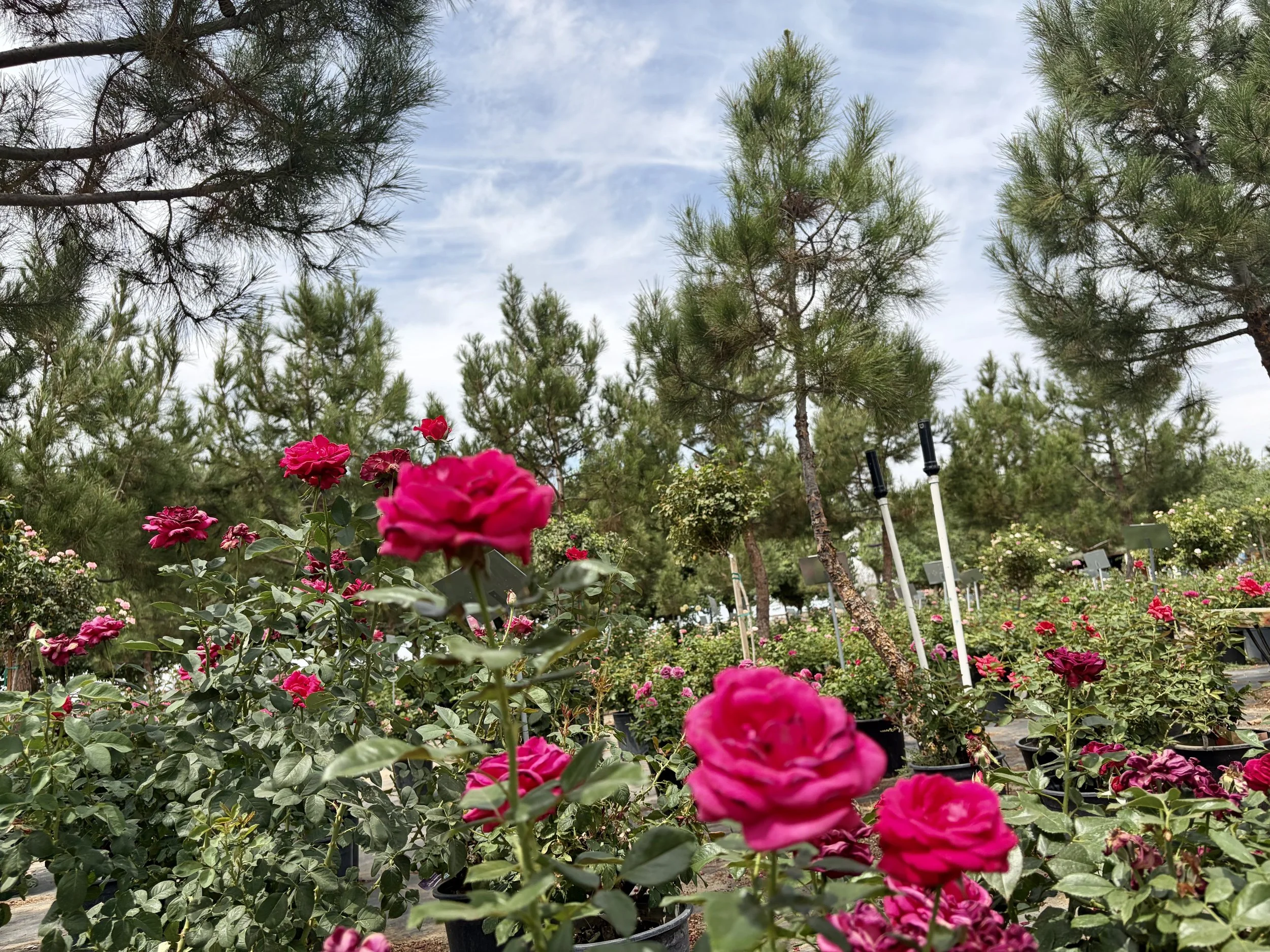
A rose without open flowers can still be healthy and may bloom again after it has had time to grow. There are pictures of the roses in each group for reference.
-
Rose flowers can change in appearance because of temperature, sunlight, plant maturity, soil conditions, and the stage of bloom.
During extreme heat, flowers may be smaller, lighter in color, less full, or may open and fade more quickly. Young plants may also produce different-looking flowers as they mature.
-
For rose care recommendations, please visit our Rose Care Guide. It covers watering, planting, fertilizing, and many other helpful tips to keep your roses thriving.
-
We wish! True naturally blue roses do not exist. Roses marketed as blue are usually lavender or purple, while bright blue cut roses are often dyed. Maybe one day breeders will surprise us!
-
Florist roses and garden roses are often bred for different jobs. Florist roses are usually selected for long stems, uniform blooms, and vase life, while garden roses are meant to grow outdoors and bloom repeatedly for years. Your garden rose may not look exactly like a grocery-store bouquet, but it offers something even better, a living plant that can keep giving you flowers season after season.
-
Fragrance varies greatly by variety. Breeders sometimes prioritize other characteristics such as disease resistance, flower production, color, growth habit, or vase life.
Weather also matters. The same rose may smell stronger during cooler mornings or mild weather and weaker during very hot conditions.
-
Rose flowers can change with temperature, sunlight, plant maturity, and season.
A variety that looks dark pink in spring may appear lighter during summer heat. Blooms may also become smaller or open faster when temperatures are very high.
This does not necessarily mean you received the wrong rose.
-
Moving a rose from the nursery to a new environment can temporarily stress the plant. Heat, transportation, changes in sunlight, and transplanting may cause existing flowers to fade or drop sooner than expected.
Focus on keeping the plant properly watered while it adjusts. New growth and another bloom cycle can follow once the plant becomes established.
-
If the shoot originates below the graft union, it may be growth from the rootstock rather than the named rose variety.
Rootstock growth can be more vigorous and may eventually compete with the desired rose, so it should usually be removed at its point of origin.
-
Sometimes cuttings can root, but success is unpredictable, and many florist roses are not ideal candidates.
There may also be plant-patent restrictions on asexually propagating patented varieties, especially for commercial purposes.
For most home gardeners, purchasing a properly identified nursery-grown plant is easier and more reliable.
-
Rose petals and leaves themselves are generally not considered highly toxic, but the thorns can cause physical injury. Gardening products applied to roses may also be unsafe for pets.
Always check the labels of fertilizers, pesticides, and other products used around animals.
-
Many can. Roses vary widely in cold hardiness, which is why we list USDA Hardiness Zones whenever reliable information is available.
A rose that survives winter in one part of the country may need extra protection in a colder climate.
-
Some varieties tolerate partial shade, but most roses produce their best growth and flowering with plenty of sunlight.
A shade-tolerant rose still does not mean a rose suitable for deep or complete shade.
-
Very hot weather can temporarily slow rose growth and affect flower size, petal count, color, and bloom duration.
The plant may redirect more energy toward survival rather than producing perfect flowers. Once temperatures moderate, flowering often improves again.
-
Not forever, but roses can live for many years, sometimes decades, when they are well suited to their environment and properly cared for.
Their lifespan depends on variety, disease pressure, climate, soil, pruning, irrigation, and overall growing conditions.
-
Neither is automatically better.
Older roses may be prized for fragrance, history, and traditional flower forms, while newer varieties may offer improved disease resistance, repeat blooming, compact growth, or new colors.
It really depends on what you want from your garden.
-
Absolutely. Mixing rose types, colors, heights, and fragrances can create a beautiful garden.
Just make sure each plant has enough room to reach its mature size and receives adequate sunlight and air circulation.
-
Rose color can shift naturally with temperature, sunlight, flower age, and season.
Some blooms open one color and gradually fade into another. Hot weather can also make certain colors appear lighter or different than they did during spring.
-
Several things, including extreme heat, dry soil, fertilizer salts, wind, sunburn, or root stress, can cause brown leaf edges. Please check our rose care guide on Stressed Roses.
-
Yellow leaves can have many causes, including:
Natural aging
Too much or too little water
Poor drainage
Heat stress
Nutrient problems
Disease
Root stress
Check the overall condition of the plant before assuming it needs fertilizer or pesticide.
-
Possible reasons include insufficient sunlight, heat stress, improper pruning, too much nitrogen fertilizer, recent transplanting, water stress, or simply the natural flowering habit of that variety.
Some roses bloom repeatedly, while others have stronger seasonal bloom periods.
-
Yes.
Choose a sufficiently large container with drainage holes and use a quality potting mix rather than heavy garden soil.
Container roses usually require more frequent watering and monitoring than roses planted in the ground.
-
Most roses perform best with at least six hours of direct sunlight each day.
Some varieties tolerate partial shade, but reduced sunlight may result in fewer flowers or weaker growth.
-
There is no single watering schedule for every rose.
Watering depends on weather, soil type, drainage, plant size, and whether the rose is newly planted or established.
-
Yes.
Roses need water, but their roots also need oxygen. Constantly saturated soil or poor drainage can contribute to root diseases and nutrient problems.
-
Feed roses when they are actively growing, following the directions on the fertilizer label.
Avoid fertilizing a severely dry, stressed, newly transplanted, or heat-stressed rose until the underlying problem has been corrected.
-
Many repeat-blooming bush roses are pruned during winter before strong spring growth begins.
Climbing roses, once-blooming varieties, young plants, and some shrubs may require different timing or lighter pruning.
-
No.
Deadheading can encourage repeat blooming and keep many roses looking tidy, but some landscape roses are self-cleaning.
You may also want to leave spent flowers on roses grown for decorative hips.
-
No.
Some roses are grafted, meaning the named rose variety grows on a different rootstock. Others are grown on their own roots.
Both methods have advantages, and the production method depends on the variety and grower.
-
Usually not completely.
Many varieties described as “thornless” are more accurately nearly thornless and may still produce some prickles, especially on young or vigorous growth.
-
Petal count is largely determined by genetics.
Some roses naturally have simple flowers with only a few petals, while others produce very full blooms with dozens or even more than 100 petals.
Petal count may also vary somewhat with weather and plant stress.
-
A traditional rose bush grows naturally from near ground level.
A Tree Rose, or Standard Rose, is created by grafting a rose variety onto the top of a tall trunk, producing a raised flowering canopy.
It is not a naturally occurring “rose tree” species, it is a specially trained and grafted form of a rose.