
Every Rose Is Unique
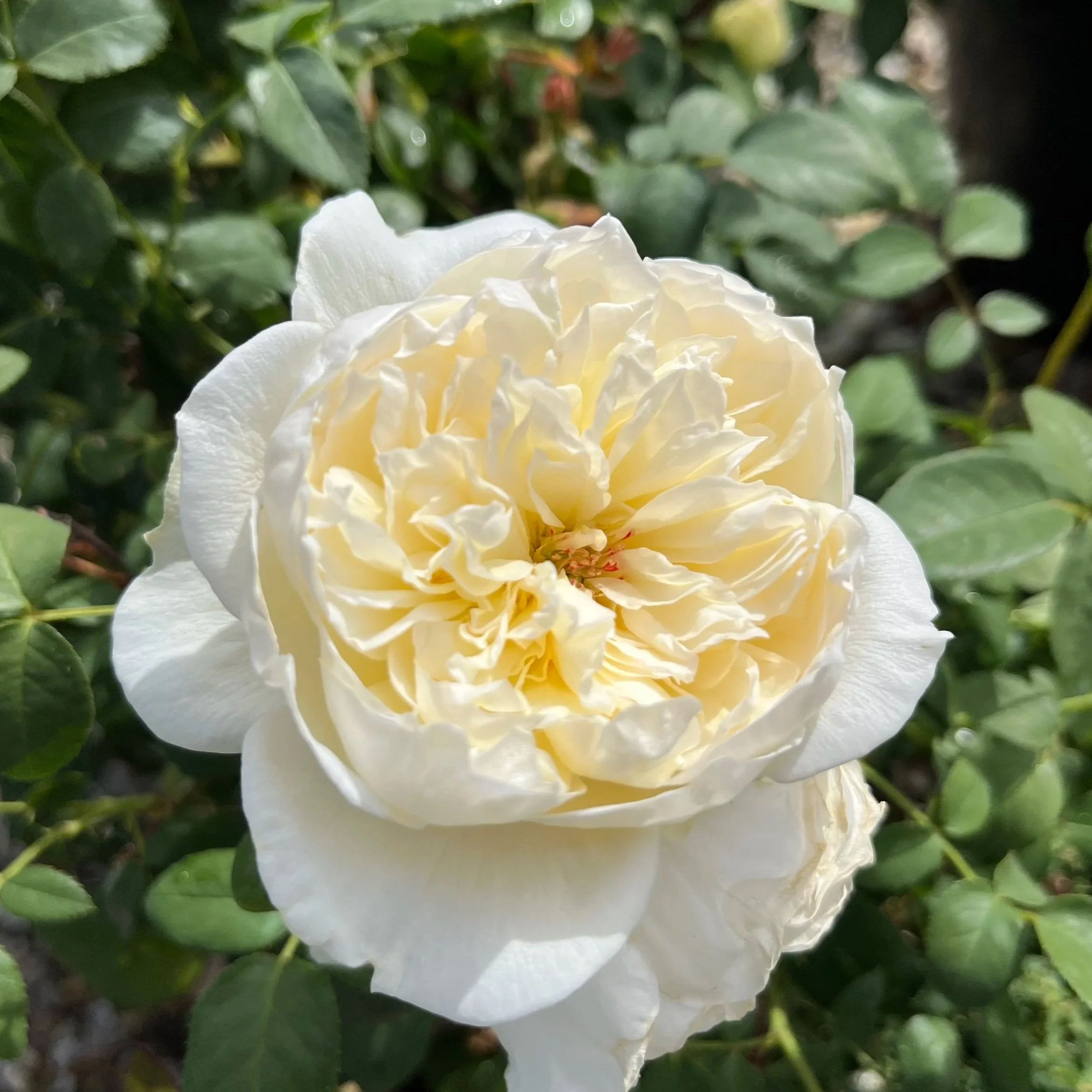
No two roses are exactly alike. Each variety has its own fragrance, bloom size, color, growth habit, and level of disease or drought resistance. While many roses share similar care requirements, some are naturally more resilient, while others benefit from a little extra attention.
If you ever have questions about a specific variety, we're always happy to help you choose the best care for your rose.
Start with Healthy Soil
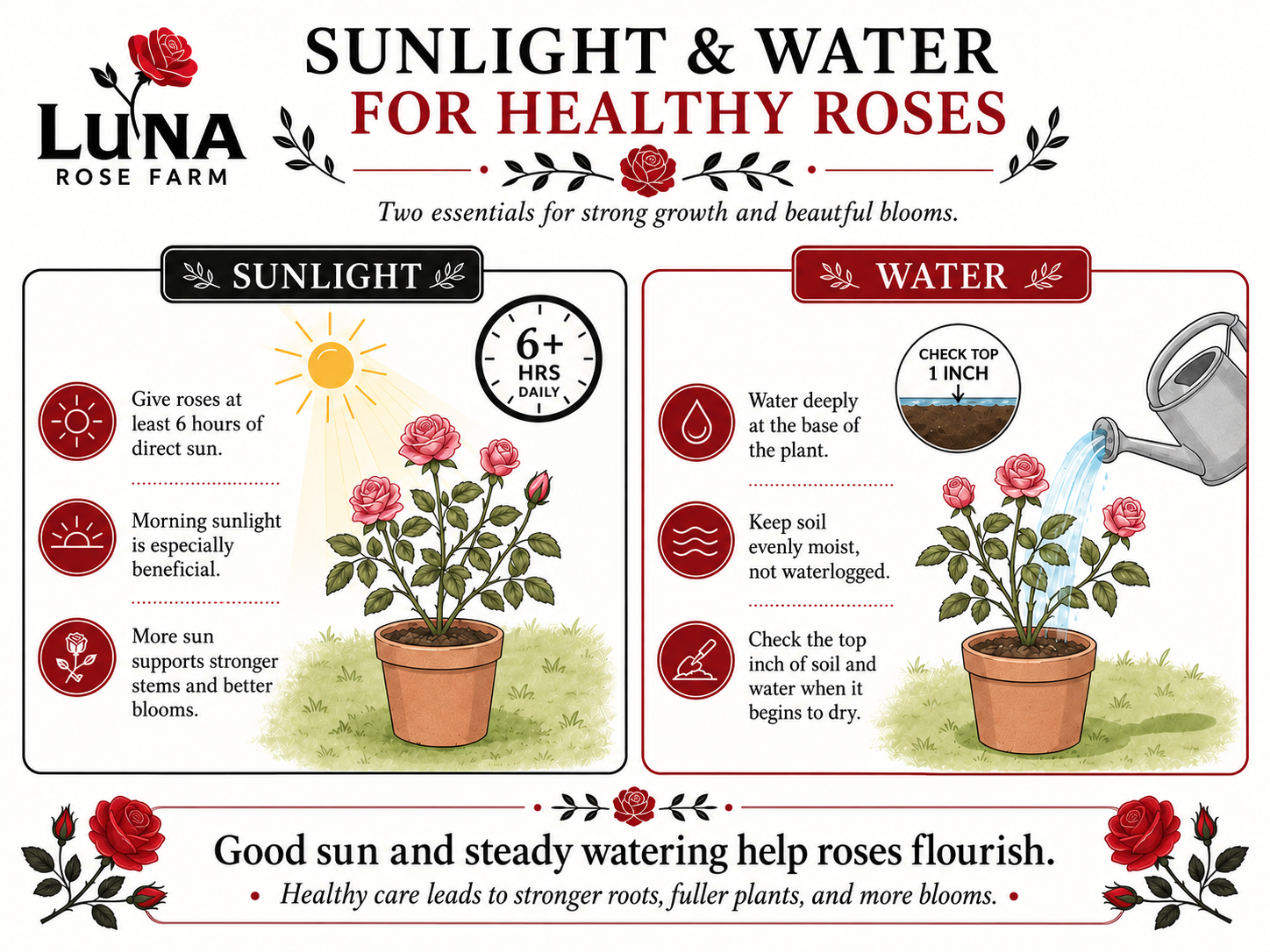
Healthy soil is the foundation of a healthy rose.
Roses grow best in fertile, well-drained soil that contains plenty of organic matter. Before planting, take a few minutes to evaluate your soil.
If your yard already supports healthy plants and trees, chances are your roses will do well there too. However, many newer homes are built on compacted clay or rocky soil, making it difficult for young roots to establish themselves.
Improving your soil with compost or quality planting mix before planting can make a tremendous difference in the long-term health of your roses.
Need help choosing the right soil? We carry quality soil products here at Luna Rose Garden and are happy to recommend the best option for your garden.
Soil, Sun, & Water
Sunlight & Water
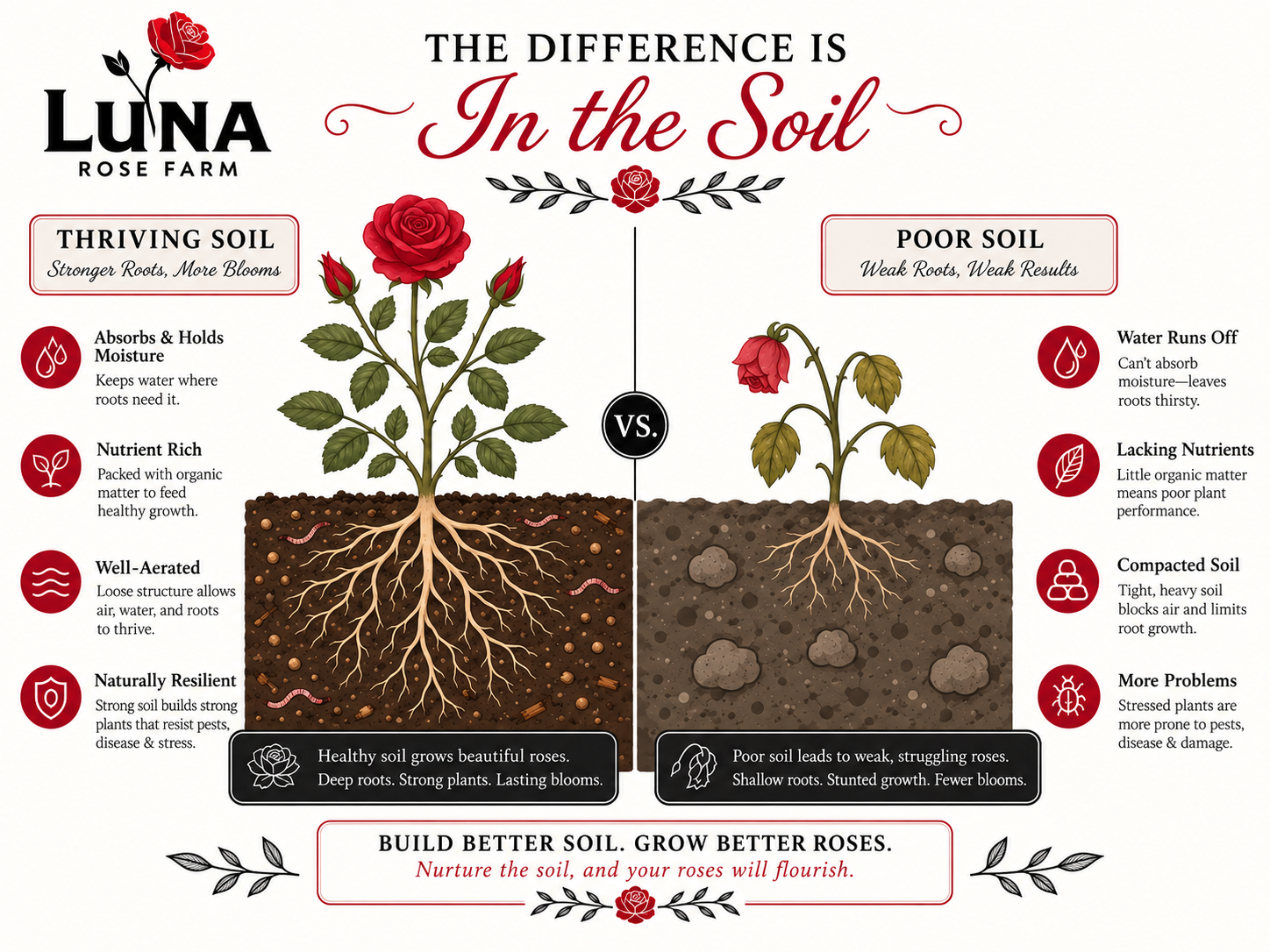
The two most important ingredients for healthy roses are sunshine and consistent watering.
Most roses perform best with at least 6 hours of direct sunlight each day, although wide varieties appreciate morning sun and good air circulation during hot weather.
Water deeply at the base of the plant rather than lightly every day. Deep watering encourages strong root growth and healthier plants.
During the heat of summer, watering in the early morning is ideal. Extremely hot weather may require additional watering depending on your soil type, temperatures, and whether your roses are planted in the ground or in containers.
Drip irrigation systems work very well for roses, but watering schedules will vary depending on your soil and your system's water output.
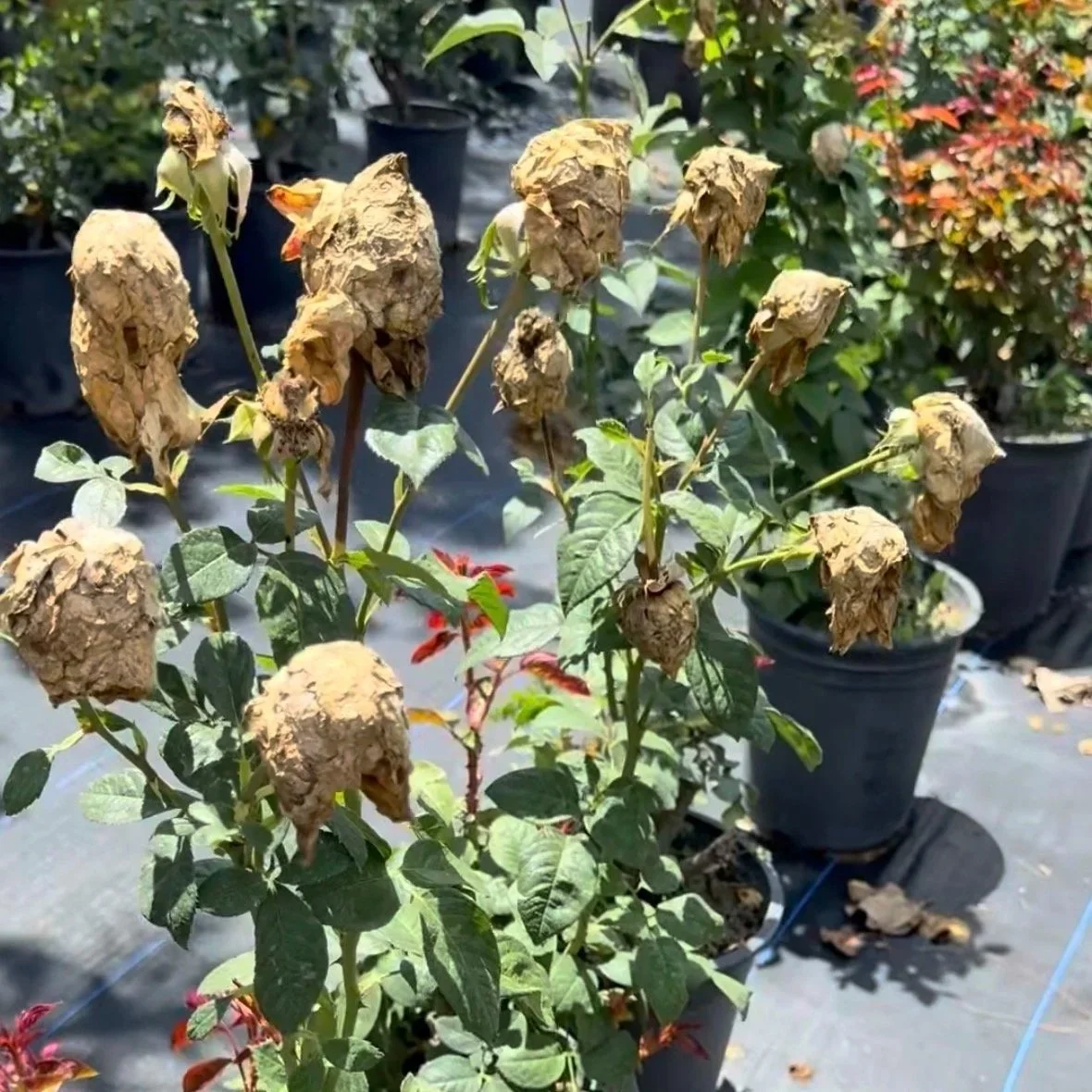
Watch for Signs of Stress
Your rose will often tell you when something isn't right.
Your rose may need more water if:
Blooms begin to droop
Leaves wilt during the cooler parts of the day
Soil feels dry several inches below the surface
Your rose may be receiving too much water if:
The soil remains constantly soggy
Leaves begin turning yellow without heat stress
Root diseases or fungal problems begin to develop
Finding the right balance is key. Roses prefer consistently moist, well-drained soil, not soil that stays constantly wet.
Planting Your New Rose
A successful rose garden begins with the right planting location.
Choose an area that receives at least six hours of direct sunlight each day. Morning sunlight is especially helpful because it allows moisture on the foliage to dry earlier in the day. Roses should also have enough space around them for good air circulation.
Before planting, check that the soil drains properly. Roses prefer fertile, well-drained soil and may struggle in areas where water remains pooled around their roots.
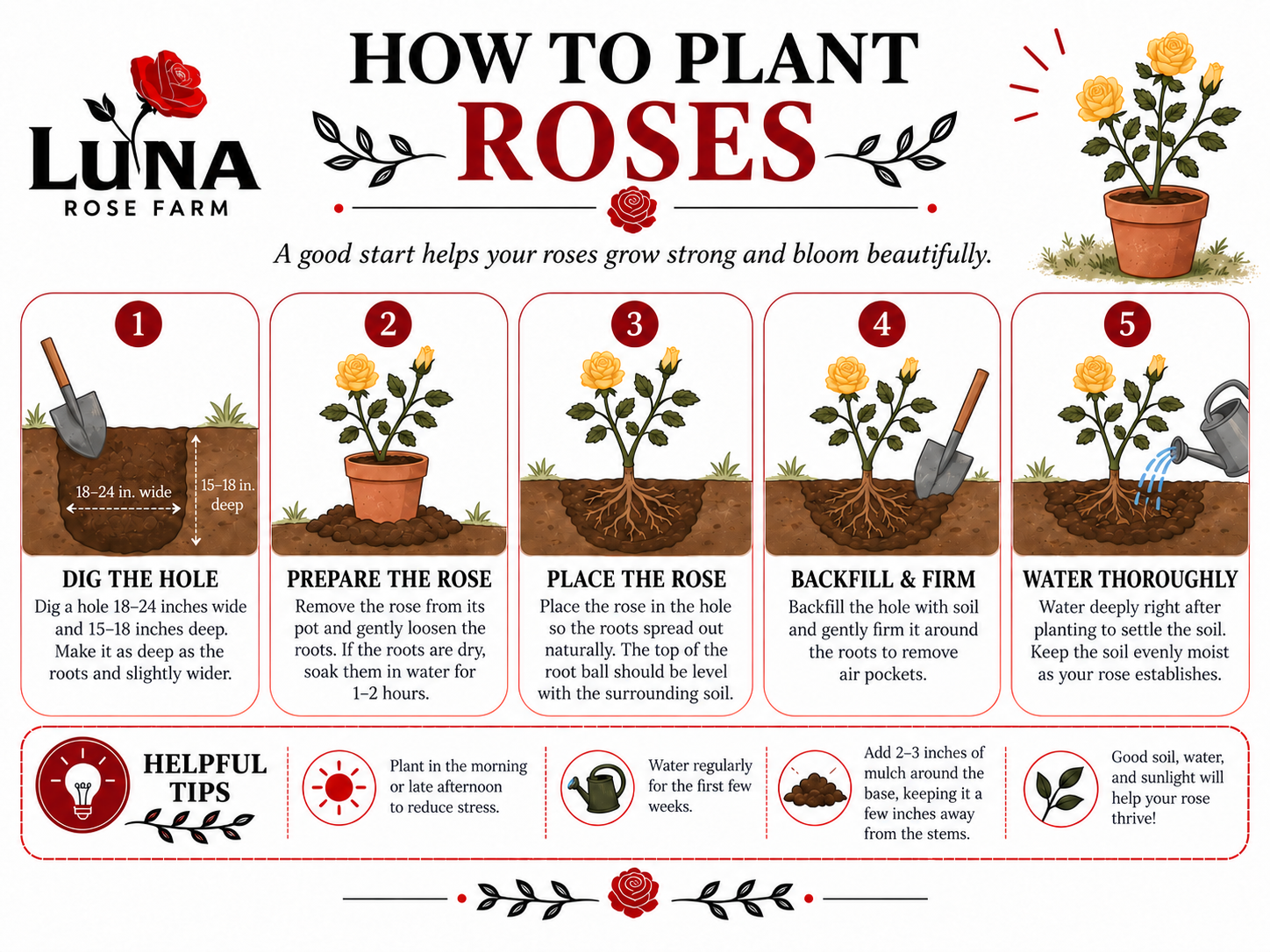
How to Plant a Container-Grown Rose
Water the rose while it is still in its nursery container.
Dig a hole approximately twice as wide as the root ball but no deeper than the container.
Carefully remove the rose from its pot.
Gently loosen tightly circling roots without breaking apart the entire root ball.
Place the rose in the hole at approximately the same depth it was growing in the container.
Backfill with the surrounding soil and gently firm it around the roots.
Water deeply to settle the soil and remove large air pockets.
Add a layer of mulch around the plant, leaving a small open area around the base of the canes.
Avoid placing large amounts of rich amendment only inside the planting hole. A heavily amended hole surrounded by compacted native soil can sometimes hold water like a basin or discourage roots from expanding into the surrounding ground.
Luna Rose Tip
Newly planted roses require closer attention than established plants. Check the soil regularly during the first few weeks, especially during warm or windy weather.
Fertilizing Your Roses
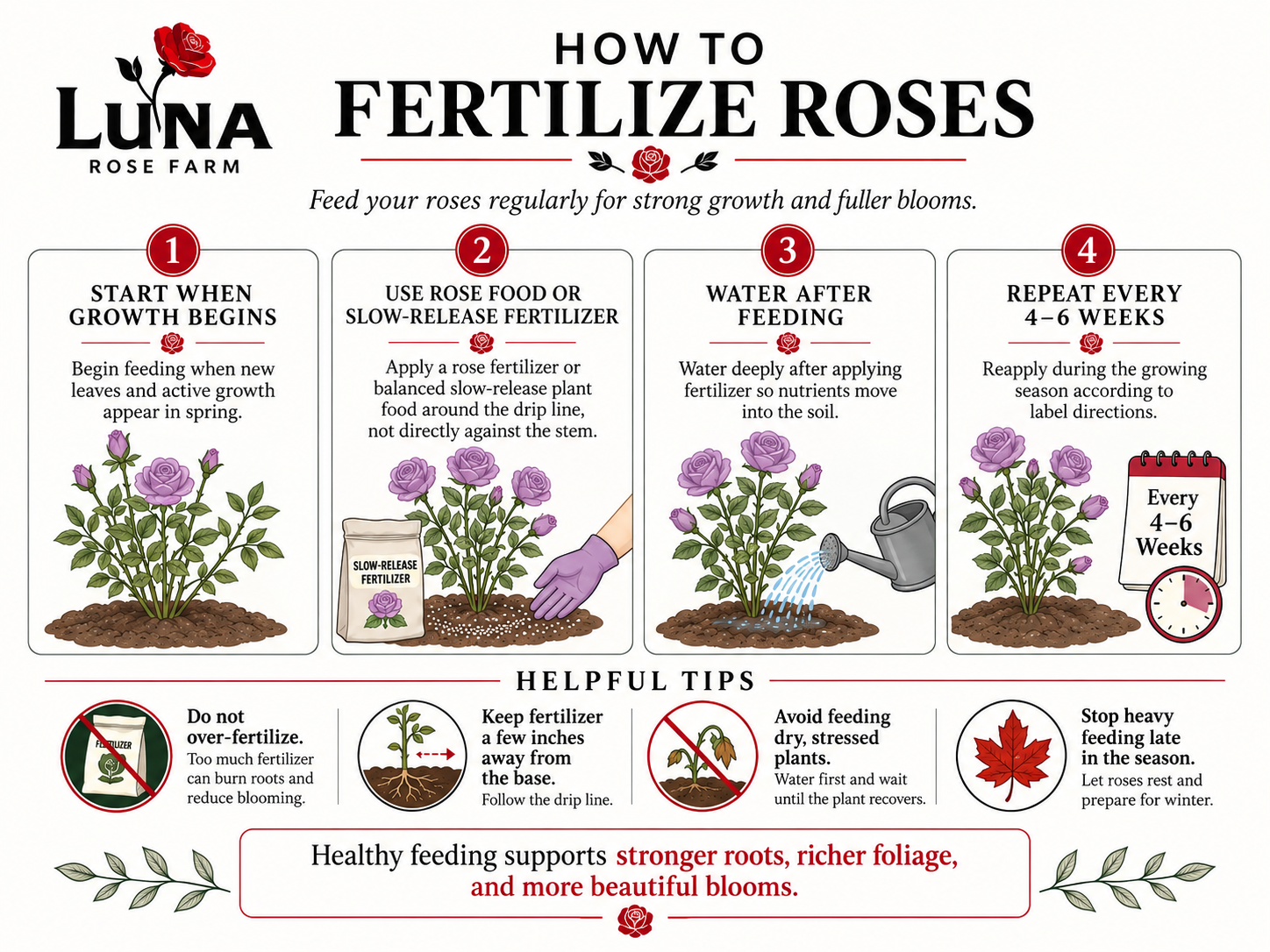
Roses benefit from nutrients, but more fertilizer does not always produce better flowers. Excessive fertilizer can encourage weak growth, increase salt buildup in the soil, contribute to pest problems, and potentially burn roots.
Begin fertilizing when the plant is actively producing healthy new growth. Depending on the fertilizer, rose variety, and condition of the soil, established roses may be fed in several light applications throughout the growing season.
General Fertilizing Schedule
Late winter or early spring:
Apply the first feeding after winter pruning and when new growth begins.
Spring:
Feed according to the product label as the rose enters its strongest growing and blooming period.
Early summer:
A light feeding may support the next bloom cycle if the plant is healthy and temperatures are not extreme.
Periods of extreme heat:
Reduce or temporarily pause fertilizer, especially when temperatures remain near or above 100°F. Fertilizer encourages tender new growth, which can be damaged by severe heat.
Early fall:
When temperatures begin to cool, a final light feeding may help support fall blooms.
Late fall and winter:
Stop regular feeding as growth slows and the rose approaches dormancy.
Always follow the fertilizer label because application rates vary greatly between liquid, granular, organic, and slow-release products. Water the soil before fertilizing and water again afterward to help move nutrients into the root zone.
Roses growing in containers may require more frequent but lighter feeding because repeated watering can carry nutrients out of the pot.
Luna Rose Tip
Never fertilize a severely dry, wilted, newly transplanted, heat-stressed, or visibly unhealthy rose. Correct the stress first and wait for the plant to recover.
Personally, we like to follow the general rule of fertilizing roses every two months or every month and a half.
Pruning Guide
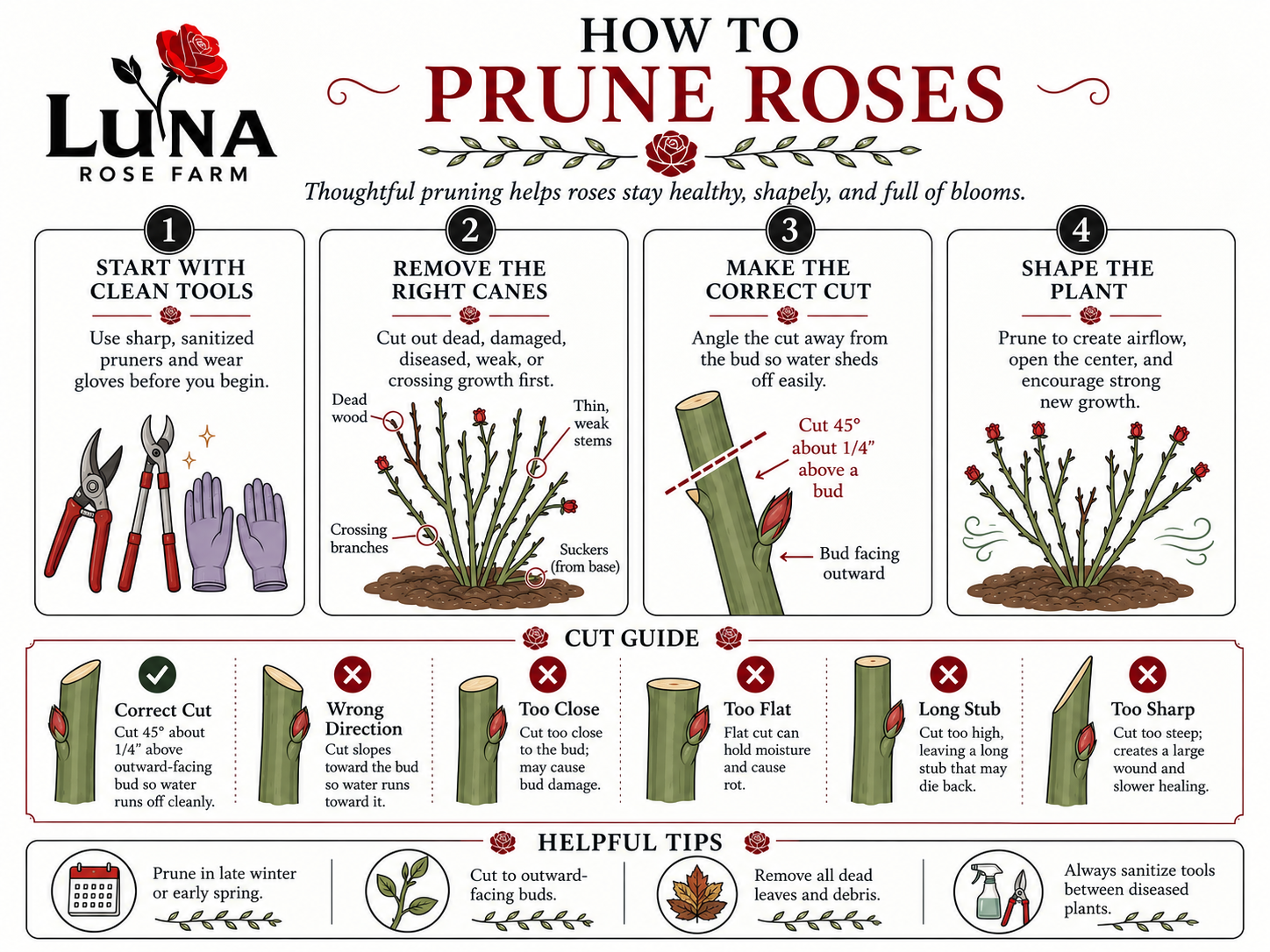
Pruning removes unhealthy growth, improves air circulation, shapes the plant, and encourages productive new canes. However, pruning needs vary among hybrid teas, floribundas, shrubs, climbers, miniature roses, and once-blooming varieties.
Before You Begin
Use clean, sharp bypass pruners. Wear sturdy gloves, eye protection, and long sleeves. Clean pruning tools between plants, especially when disease is present.
What to Remove
Begin by removing:
Dead, damaged, or diseased canes
Weak or unusually thin growth
Canes rubbing or crossing against one another
Growth crowding the center of the plant
Suckers growing from below the graft union
Old leaves and debris collected around the base
For many bush roses, the goal is an open shape that allows sunlight and air to move through the plant.
Make clean cuts just above a healthy outward-facing bud when possible. Avoid leaving long dead stubs above the bud.
Different Roses Need Different Pruning
Hybrid teas and grandifloras:
These generally benefit from more substantial annual pruning.
Floribundas:
These are often pruned more lightly so the plant retains additional branching and produces clusters of flowers.
Shrub and landscape roses:
These may need only shaping, thinning, and the removal of old or damaged wood.
Climbing roses:
Avoid heavily pruning a young climber before it develops its main structural canes. Once established, retain the long main canes and shorten selected side shoots. Some climbers bloom primarily on older wood, so their pruning schedule may differ from repeat-blooming bush roses.
Common Pests & Diseases
-
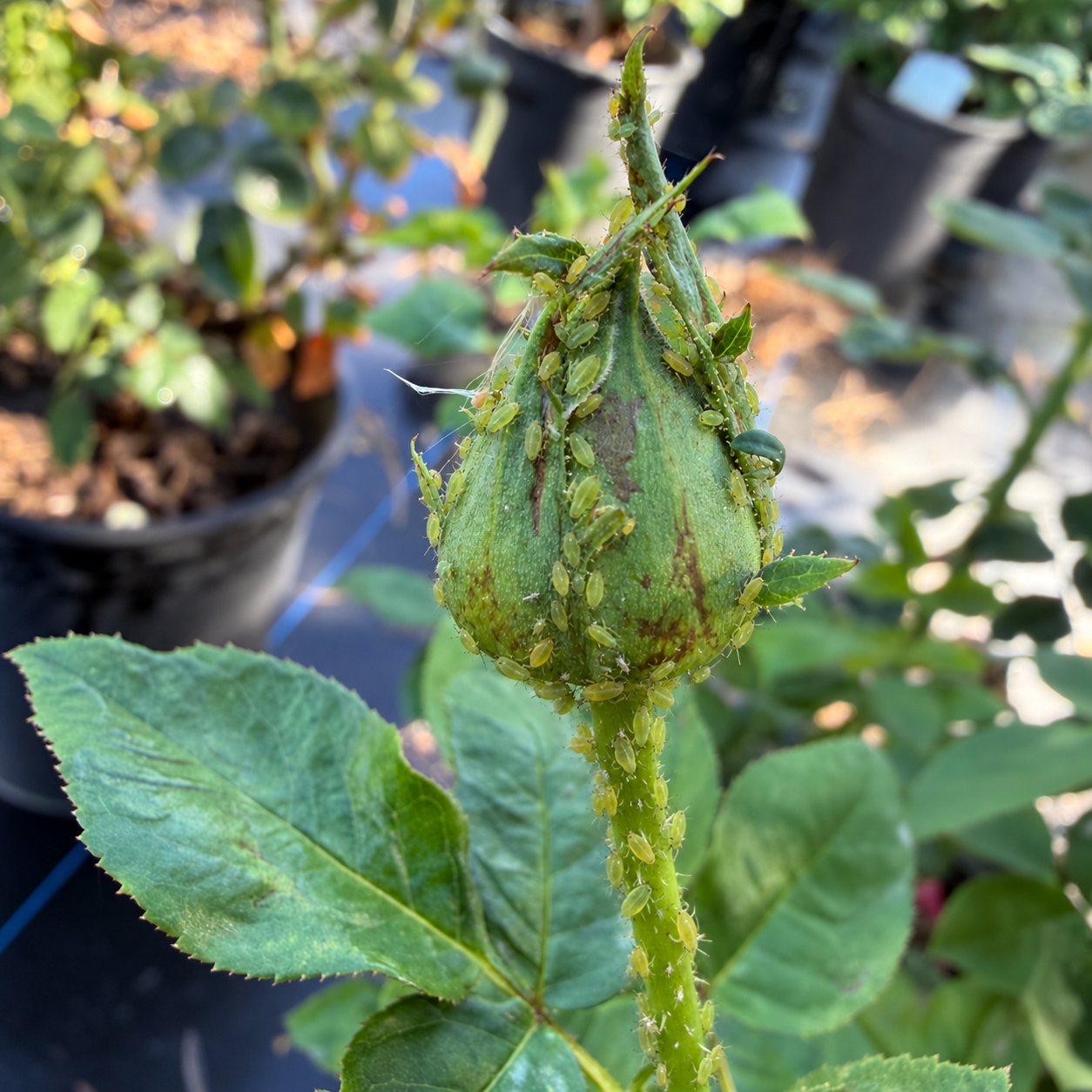
![Close-up of a rosebud covered with numerous green aphids, with green leaves in the background.]()
Aphids
Small, soft-bodied insects that gather on tender new growth and flower buds. A strong stream of water can often remove light infestations. Beneficial insects may also help control them.
Prevention & Treatment: Regularly inspect new growth and rinse off small infestations with water before considering insecticidal soap or other labeled treatments.
-
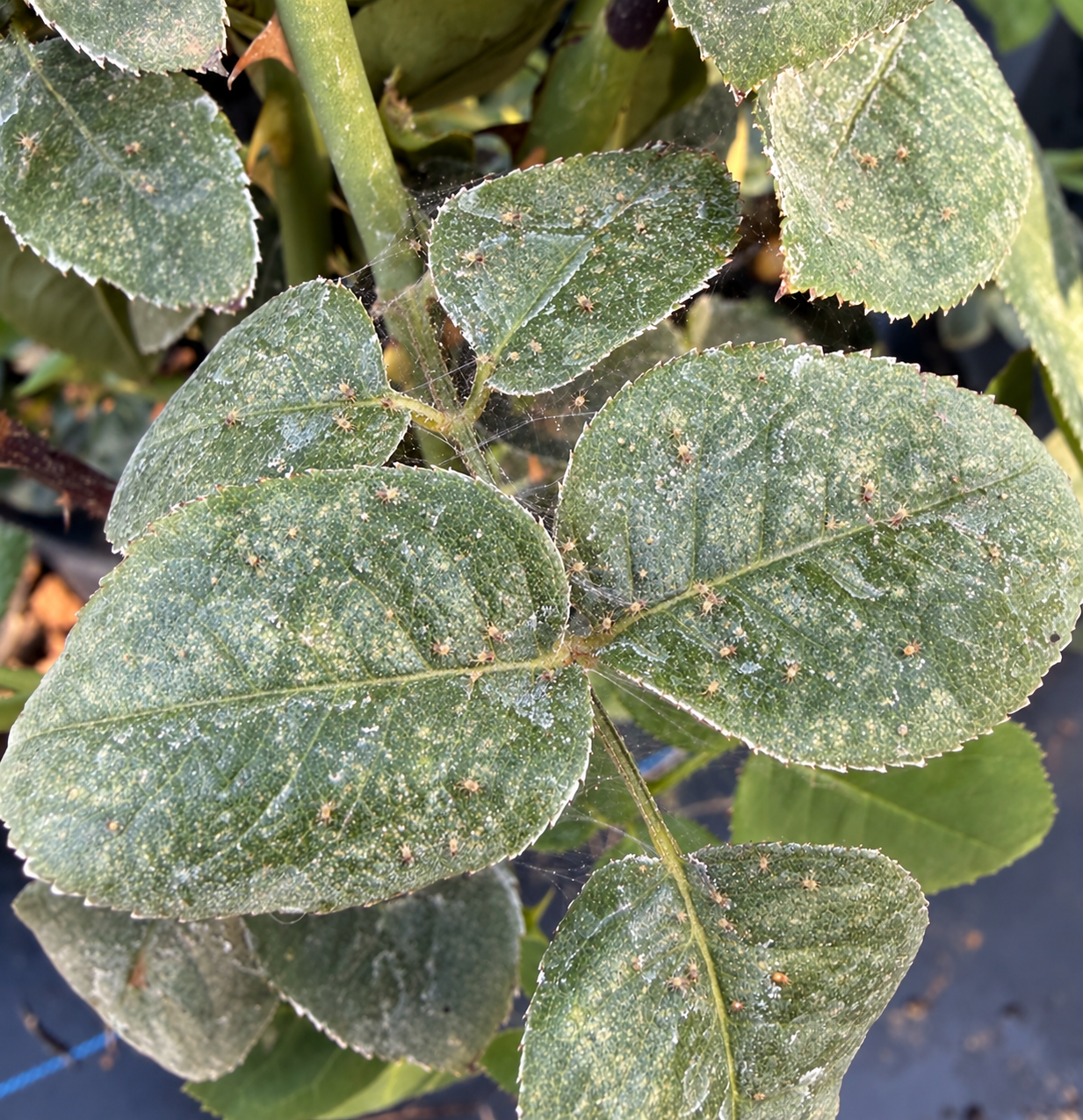
![Close-up of green leaves covered in small pests and webbing.]()
Spider Mites
Very small pests that are common during hot, dry, and dusty weather. Symptoms may include stippled or faded leaves, webbing, and premature leaf drop.
Prevention & Treatment: Keep roses properly watered, reduce dust around plants, and wash the undersides of leaves with water; heavier infestations may require a product specifically labeled for mites.
-
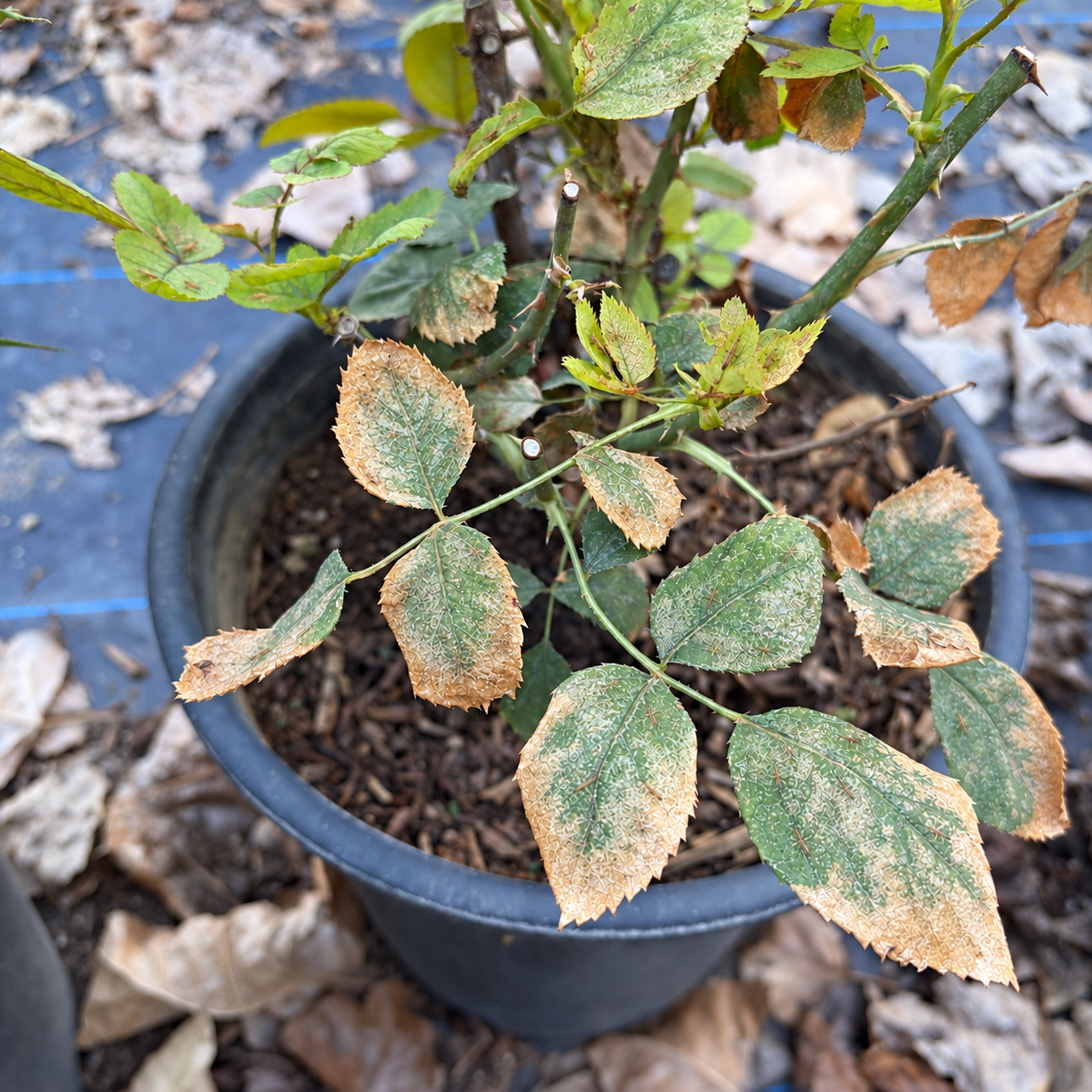
![A potted plant with green and brown, leafed foliage showing signs of distress or disease, evidenced by leaf discoloration and edges. The plant is in a black plastic pot on a ground surface covered with dried leaves.]()
Thrips
Tiny insects that feed inside flower buds and petals. They may cause streaked, distorted, browned, or damaged blooms.
Prevention & Treatment: Remove badly damaged flowers and spent blooms, keep the area clean, and use a labeled treatment only when infestations are causing significant damage.
-
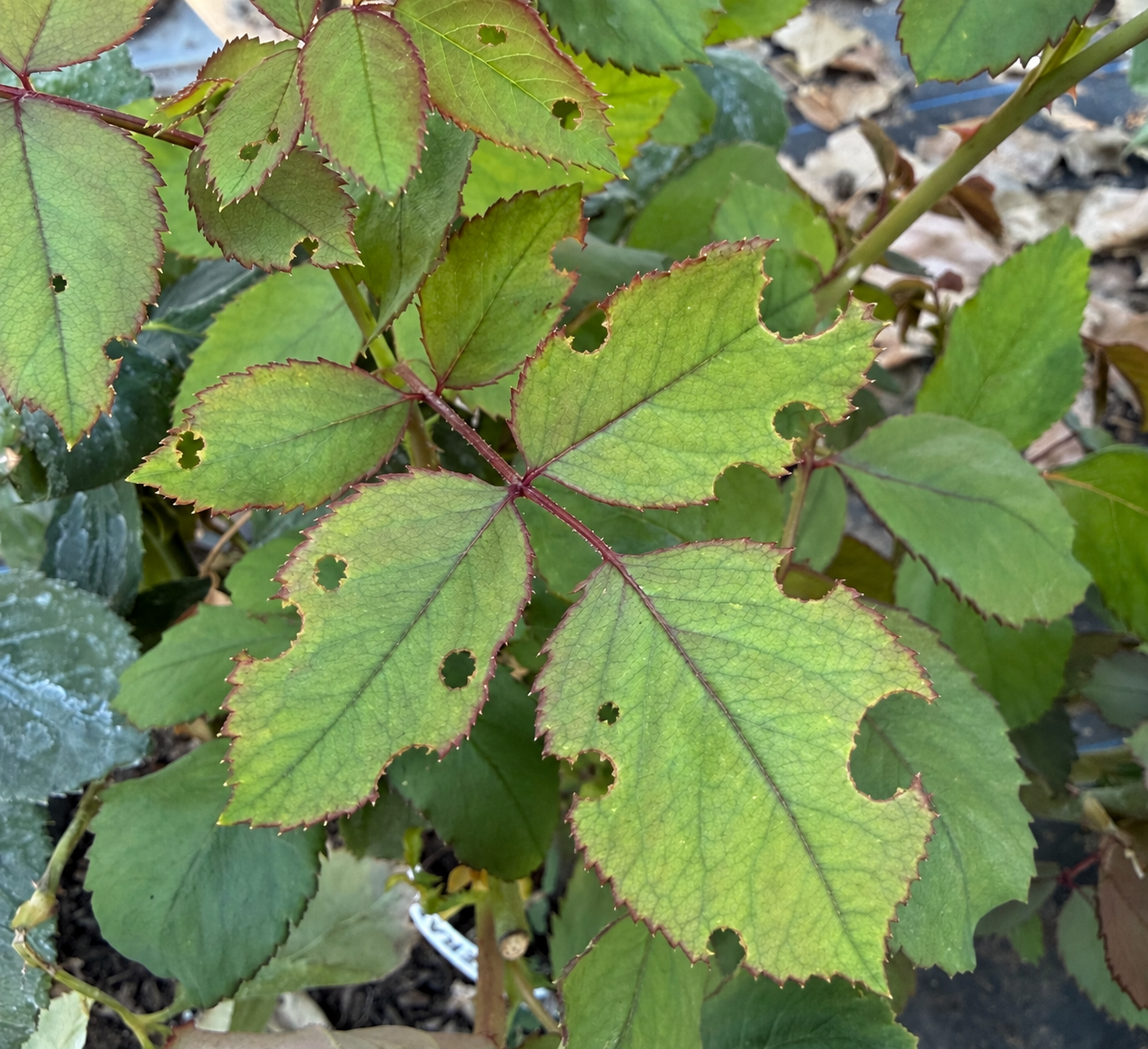
![Green leaves with holes and reddish edges on a plant.]()
Beetles and Caterpillars
These pests may chew irregular holes in flowers or foliage.
Prevention & Treatment: Inspect plants frequently and hand-pick beetles or caterpillars when practical; larger infestations may require an appropriately labeled control.
-
![A close-up of a green rose stem with sharp thorns and several small brown pests, possibly aphids, clustered along the stem and leaf margins.]()
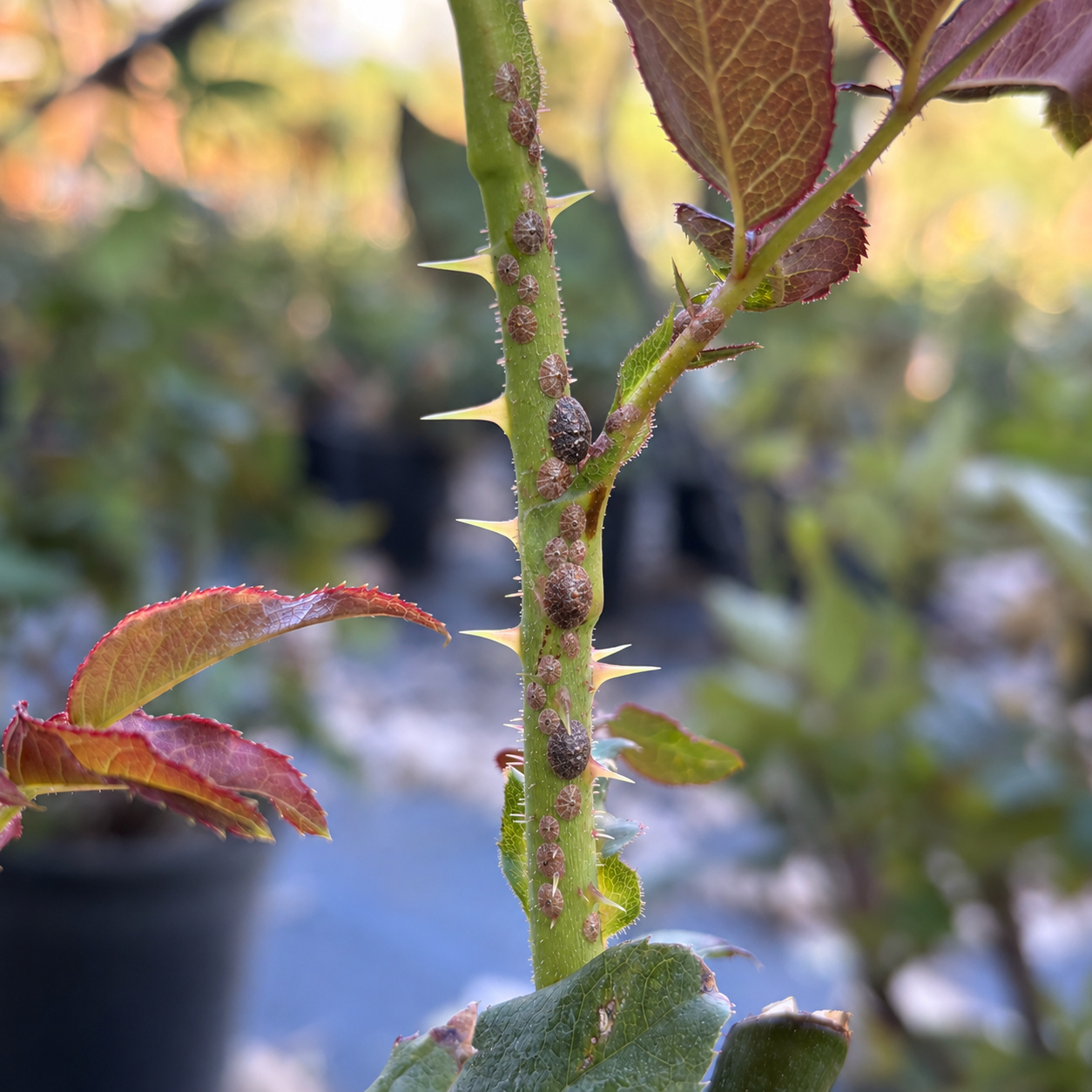
Scale Insects
These may appear as small, fixed bumps along stems and can weaken plants when populations become heavy.
Prevention & Treatment: Prune heavily infested stems when possible and treat susceptible crawler stages with horticultural oil or another product specifically labeled for scale.
-
![Close-up of green leaves with white powdery residue or mold.]()
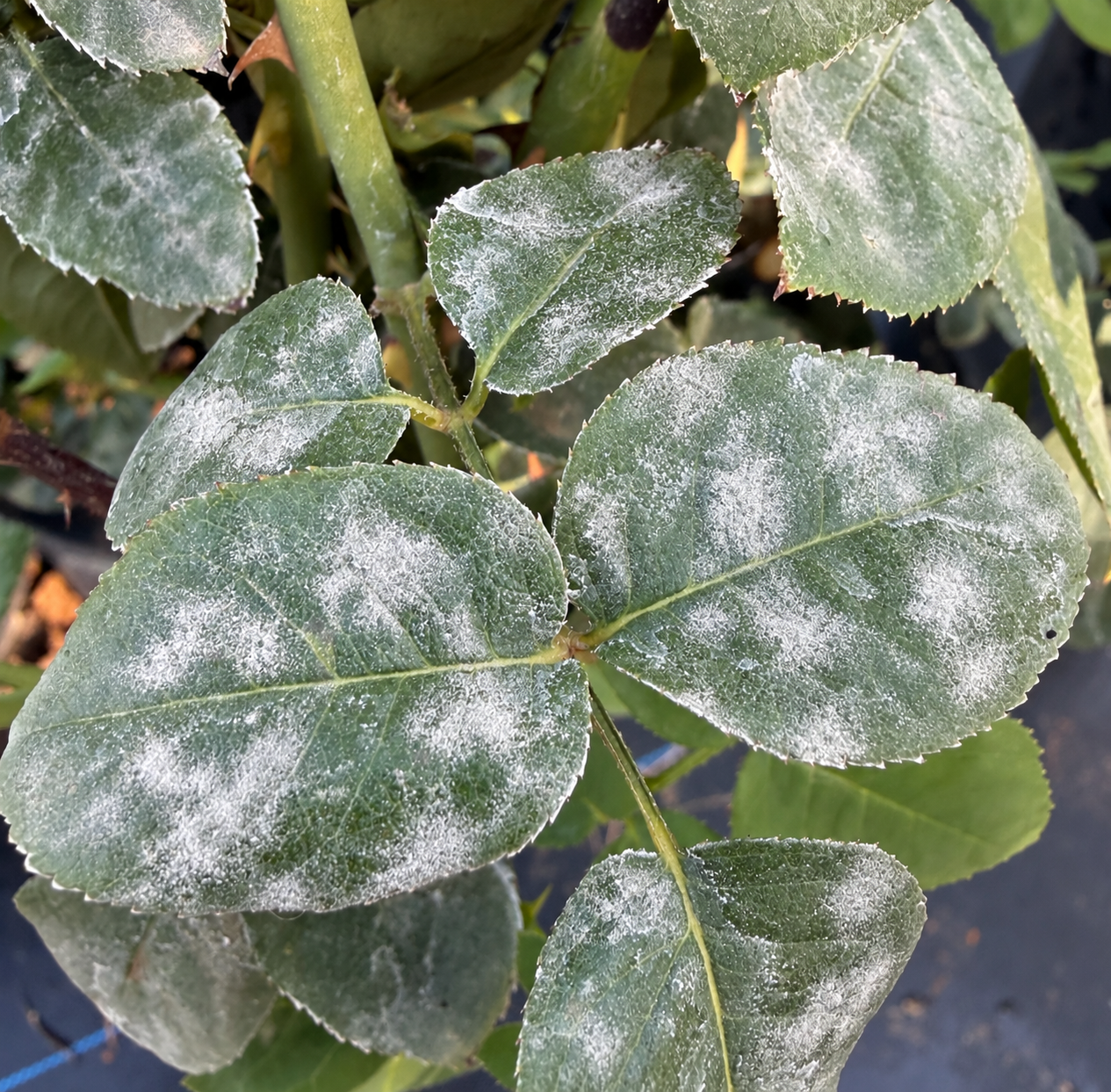
Powdery Mildew
Often appears as a white or gray powdery coating on leaves, stems, or buds.
Prevention & Treatment: Improve sunlight and air circulation, avoid excessive nitrogen fertilizer, and remove heavily infected growth; fungicides labeled for powdery mildew may be used when needed.
-
![Close-up of a rose plant leaf with yellowing and numerous black spots indicating disease or damage.]()
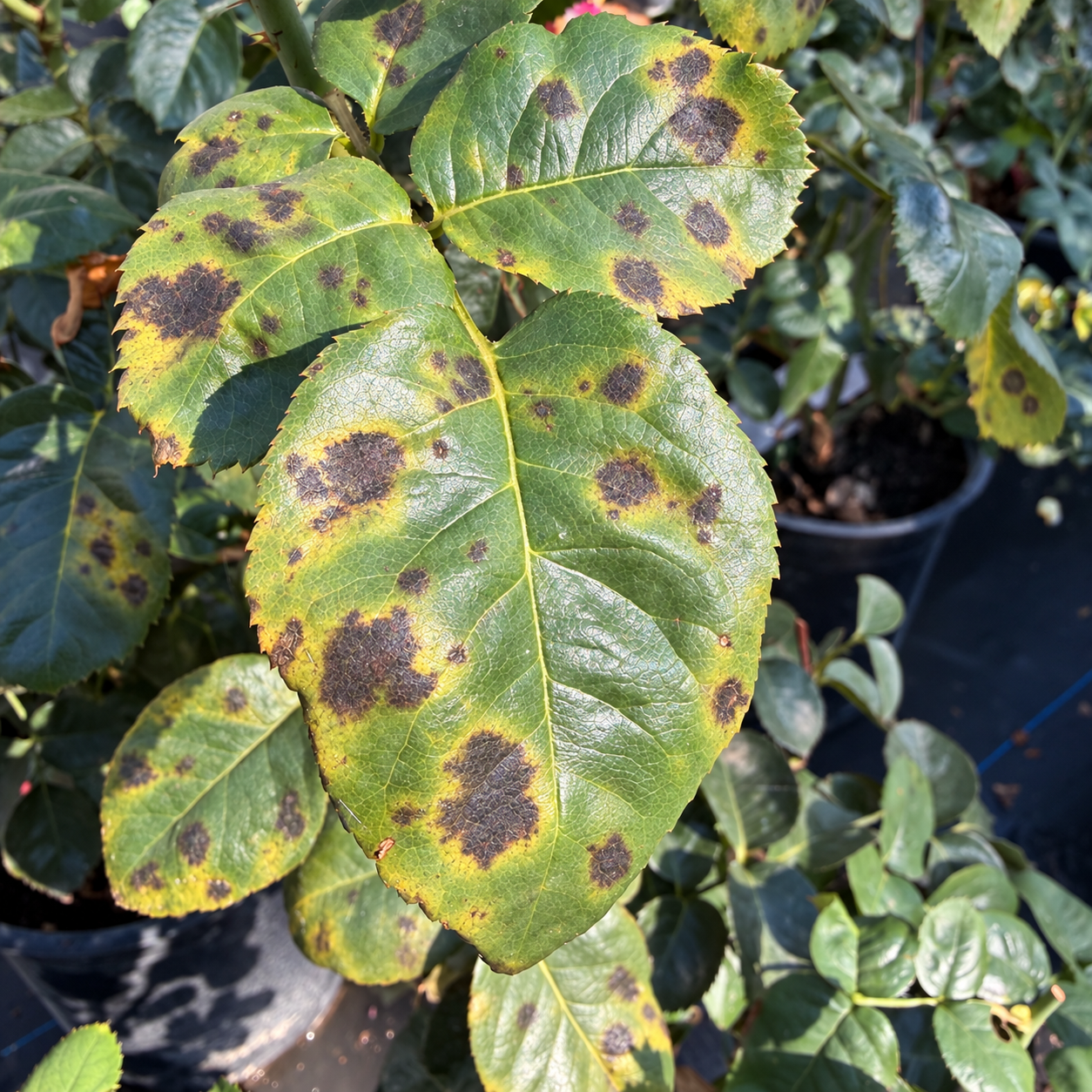
Black Spot
Produces dark leaf spots, often with yellowing around the affected areas. Infected leaves may eventually fall.
Prevention & Treatment: Remove infected and fallen leaves, water near the base of the plant, and improve air circulation; use a labeled fungicide if cultural controls are not enough.
-
![Close-up of a rose plant with yellowing and orange-spotted leaves, indicating possible disease or nutrient deficiency, in a garden or nursery setting.]()
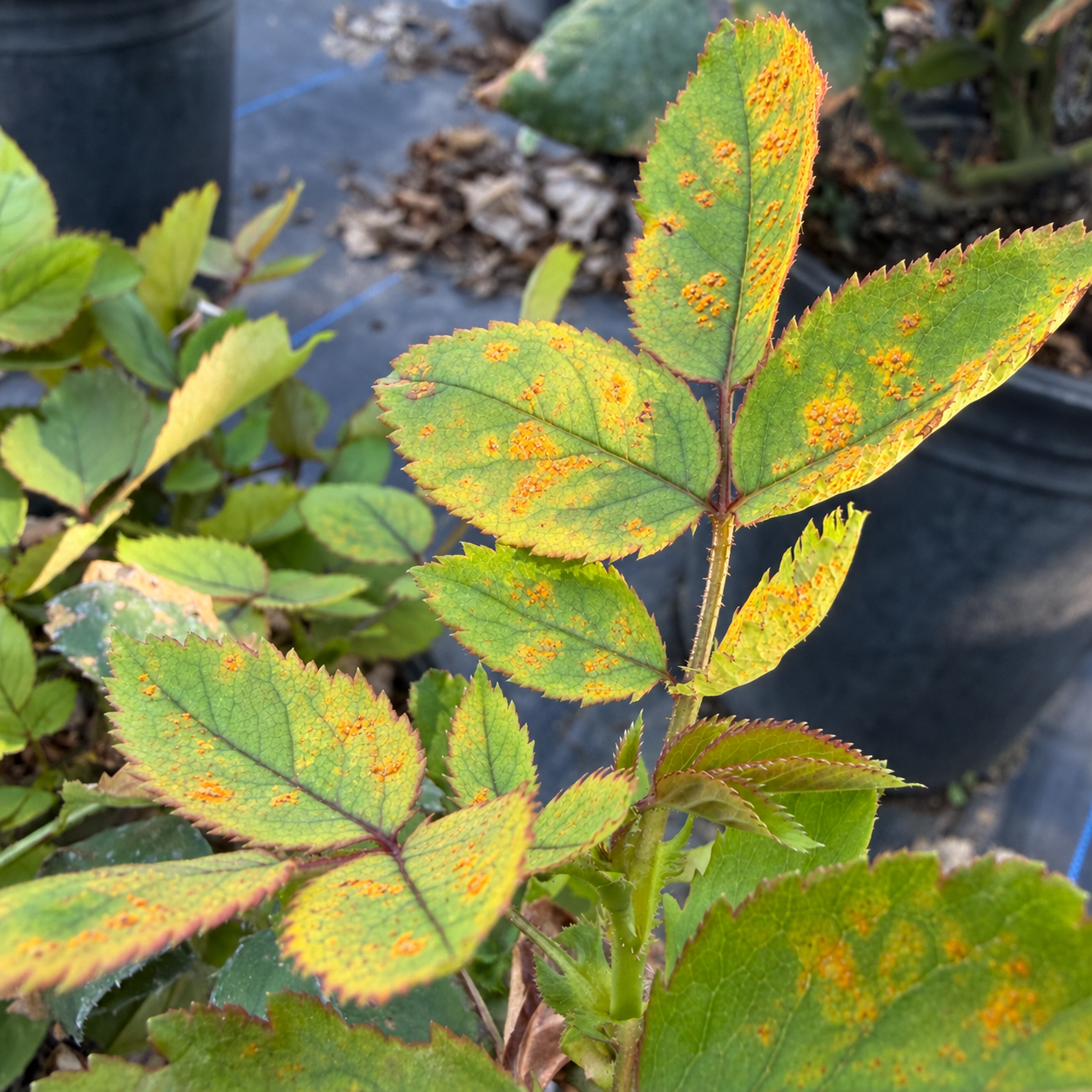
Rust
Frequently appears as orange or rust-colored pustules, especially on the undersides of leaves.
Prevention & Treatment: Remove infected leaves and garden debris, avoid keeping foliage wet for long periods, and use a rose-safe fungicide when necessary.
-
![Two roses, one blooming and one wilted, surrounded by green leaves.]()
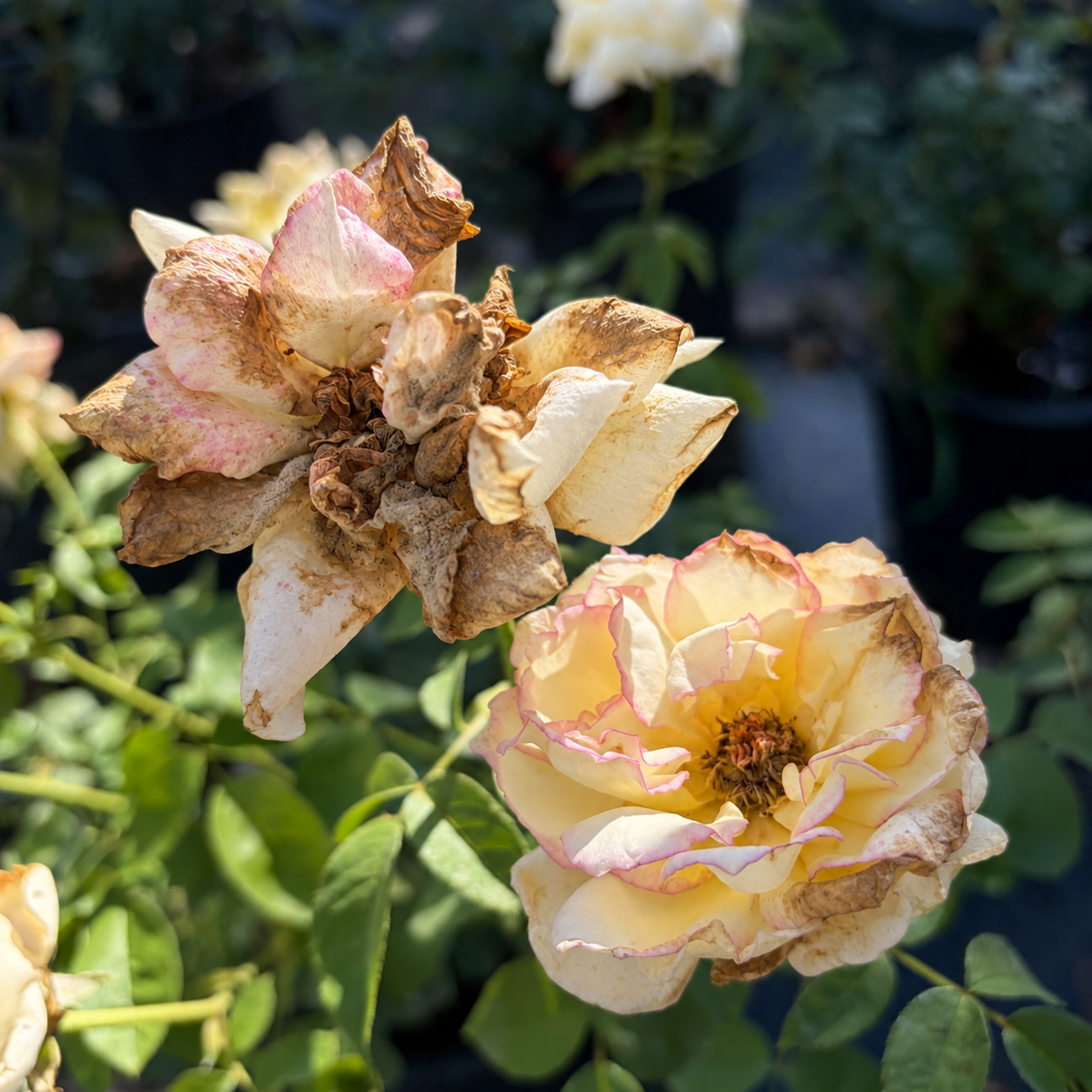
Botrytis or Flower Blight
Can cause buds and petals to turn brown or fail to open properly, especially in cool or damp conditions.
Prevention & Treatment: Remove affected flowers promptly, improve air circulation, avoid overhead watering late in the day, and reduce prolonged moisture around blooms.
-
![A garden bed with soil and a drip irrigation line running through it, surrounded by green plants and some dry leaves, with a sidewalk visible on the right side of the image.]()
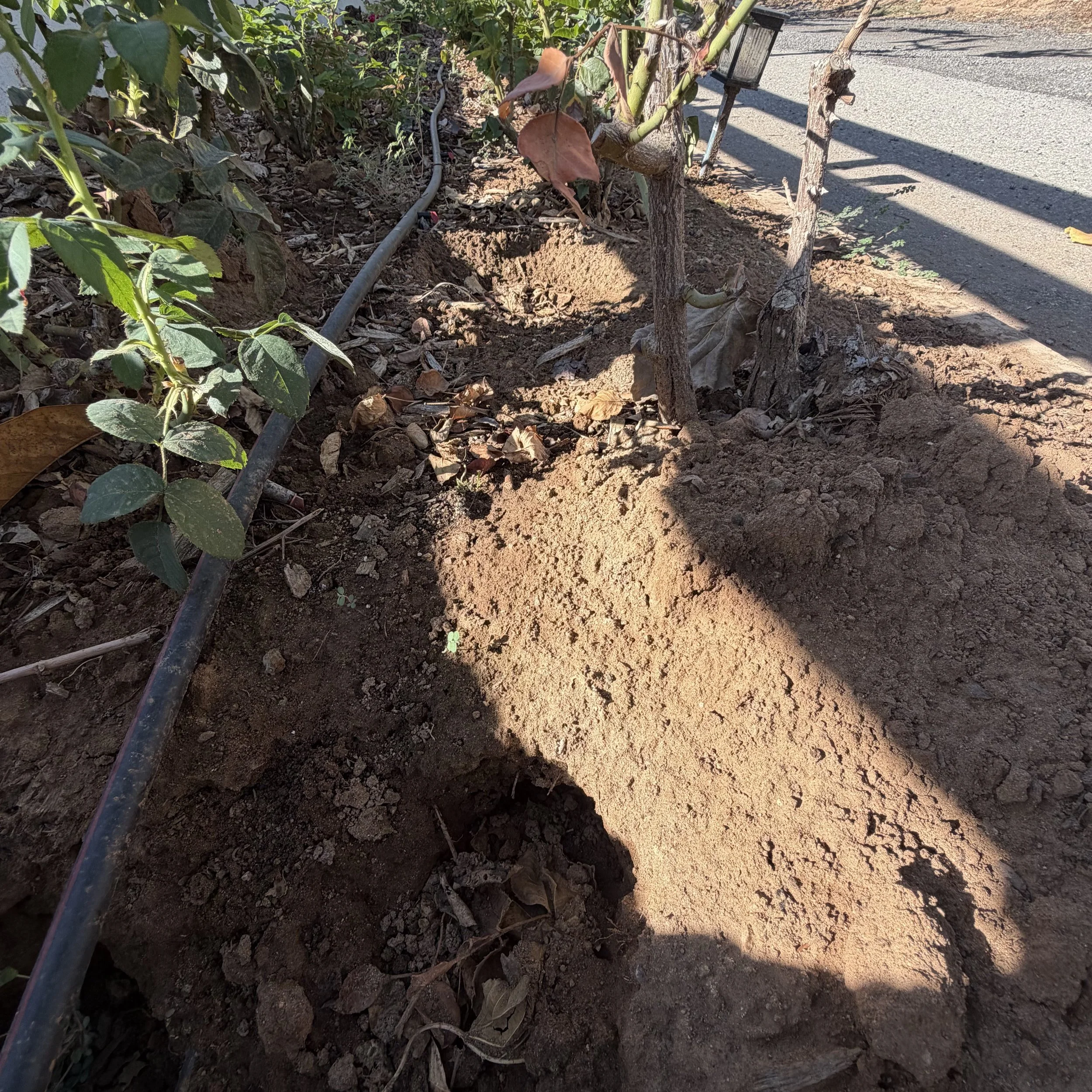
Gophers
Burrowing rodents that feed on roots and can damage or pull plants underground. Fresh crescent-shaped soil mounds are often the most noticeable sign of activity, and gophers may also damage irrigation lines.
Prevention & Treatment: Watch for fresh mounds and act early. Protect valuable roses with underground wire baskets or barriers, and use properly placed gopher traps in active burrows when control is needed. -
![Close-up of a plant with green and reddish leaves, sunlight highlighting parts of the foliage, blurred background of a nursery or garden.]()
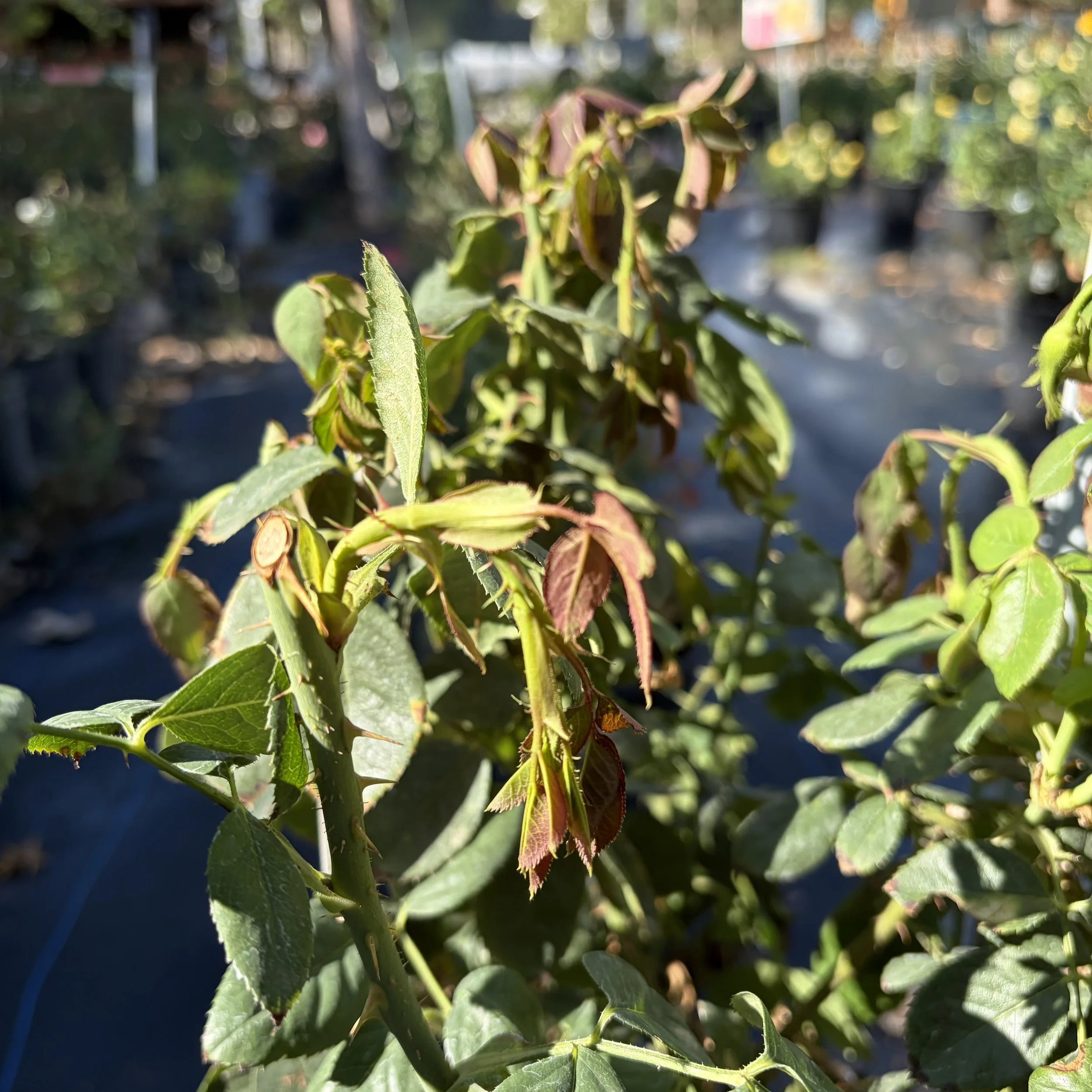
Water Deficiency
Too little water can cause rose leaves to fade, wilt, develop dry or brown edges, and drop early. Prolonged water stress can also reduce flowering, slow growth, and cause dieback.
Prevention & Treatment: Water deeply and consistently based on weather, soil conditions, and the rose’s needs. Check soil moisture regularly and adjust irrigation as temperatures and seasons change, while also avoiding prolonged waterlogged soil.
-
![Close-up of green leaves on a plant, showing veins and slightly serrated edges.]()
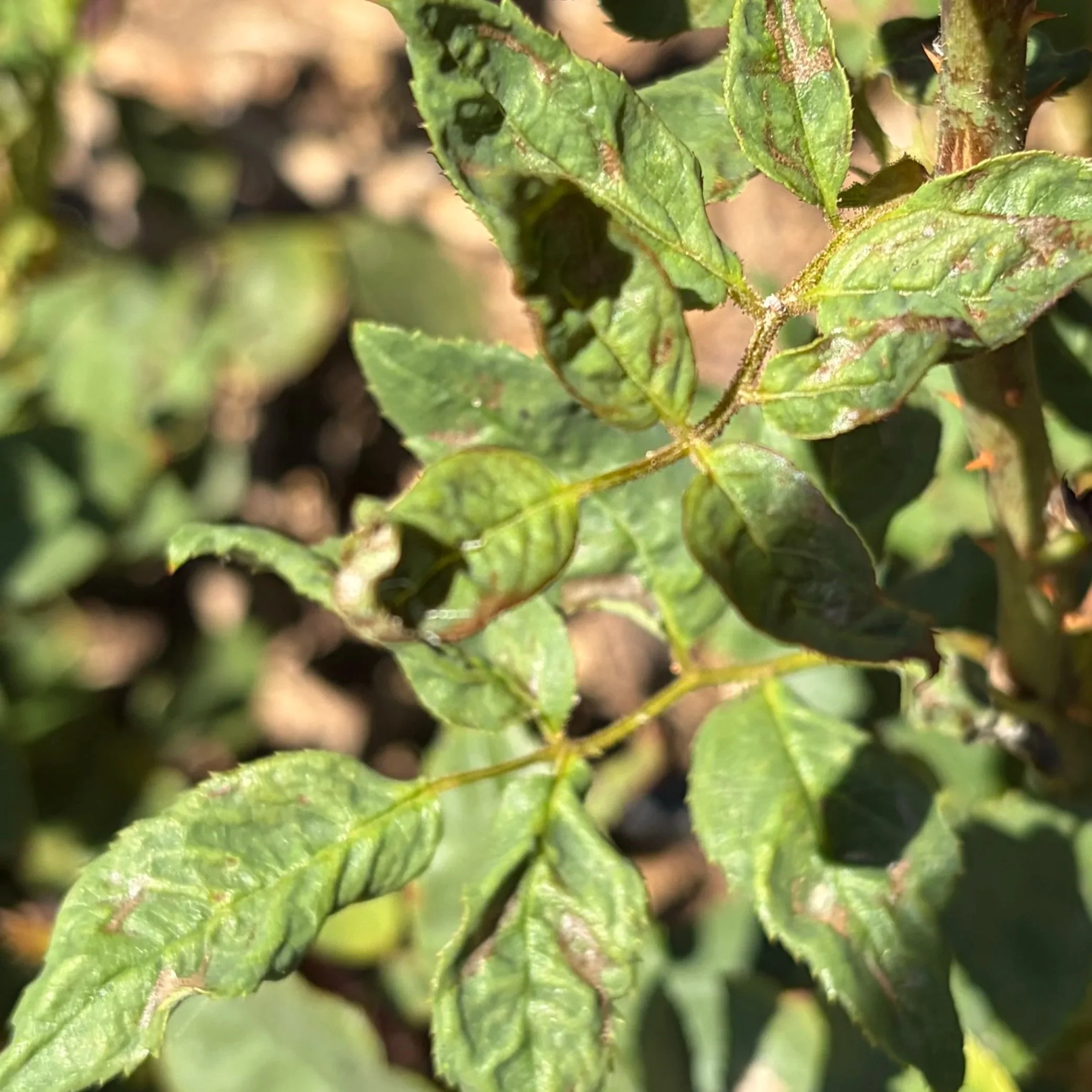
Nutrient Deficiency
Can cause smaller leaves, distorted growth, reduced flowering, and slower overall development. Different nutrient deficiencies may produce different patterns on the foliage.
Prevention & Treatment: Maintain healthy soil and proper watering, and avoid fertilizing blindly. If symptoms persist, consider soil testing to identify the specific deficiency before applying the appropriate fertilizer, such as pH or drainage.
-
![]()
Rose Rosette Virus (RRV)
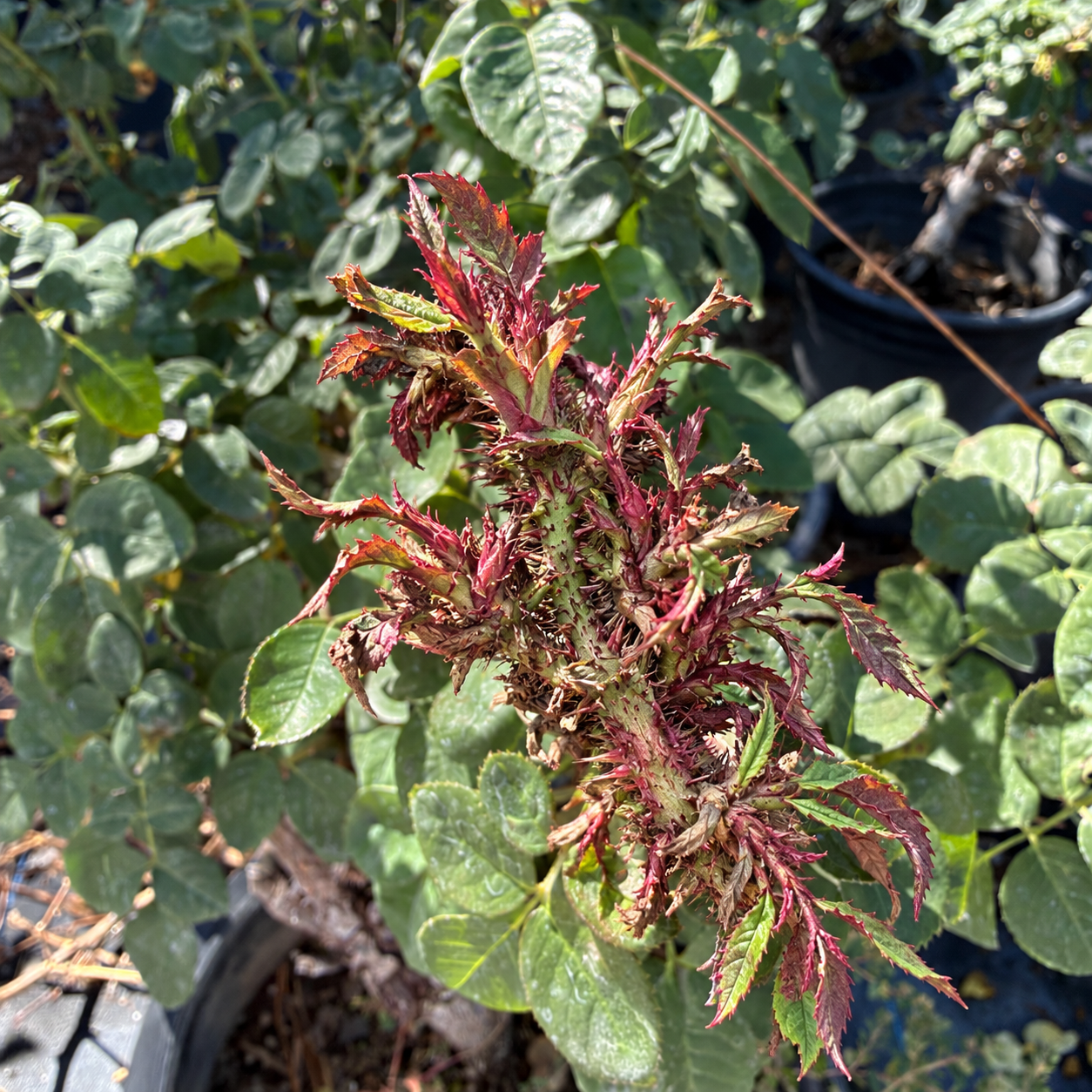
A serious viral disease spread by microscopic eriophyid mites. Symptoms may include unusual red growth that stays red, excessive thorniness, distorted leaves and flowers, thickened canes, and dense clusters of abnormal growth known as “witches’ broom.”
Prevention & Treatment: There is currently no cure for Rose Rosette Virus. If infection is confirmed, remove and dispose of the entire rose, including the root ball, to reduce the risk of spreading it to nearby plants. Inspect surrounding roses regularly and remove nearby wild multiflora roses when possible.
Good Prevention Practices
Provide sufficient sunlight and air circulation.
Water near the base of the plant whenever possible.
Avoid allowing foliage to remain wet overnight.
Remove heavily infected leaves and flowers.
Pick up fallen rose leaves and pruning debris.
Avoid excessive nitrogen fertilizer.
Select disease-resistant varieties when possible.
Identify the problem before applying any pesticide.
Not every insect requires treatment. Healthy, established roses can often tolerate minor pest damage. When treatment is necessary, begin with the least disruptive method and always follow the pesticide label.
Important Safety Note
Never use a pesticide simply because a rose looks unhealthy. Heat stress, watering problems, fertilizer burn, poor drainage, and nutrient deficiencies can resemble pest or disease damage.
Deadheading Spent Blooms
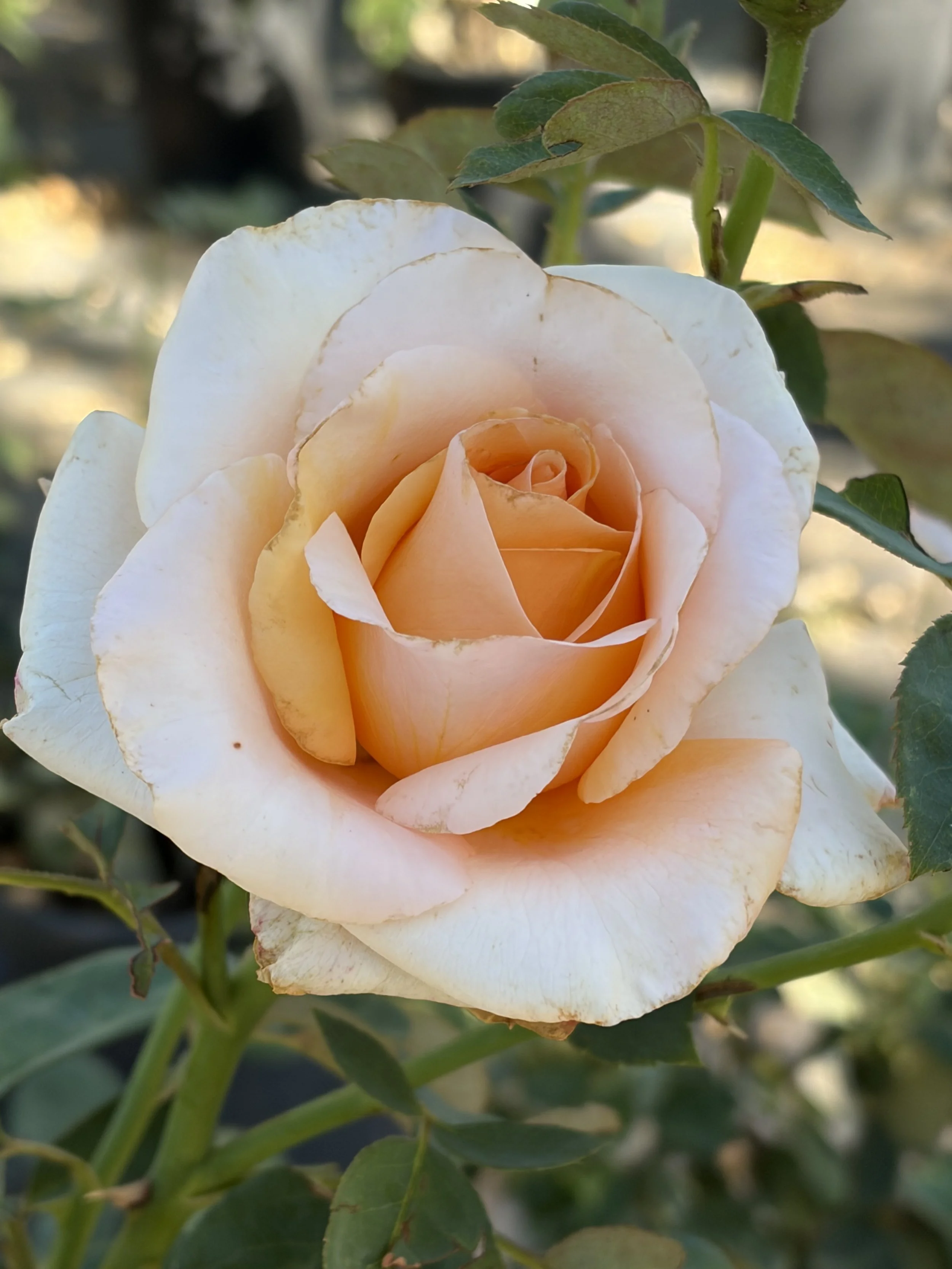
Deadheading is the removal of faded flowers. For many repeat-blooming roses, it keeps the plant looking tidy and directs energy toward new growth and future flowers rather than seed or hip production.
Follow the flower stem downward and make a clean cut above a healthy outward-facing leaf or bud. The exact cutting point is less important than leaving healthy foliage and avoiding unnecessary removal of long sections of stem.
During extreme summer heat, deadhead lightly. Avoid severe cutting that could expose previously shaded canes or encourage a flush of delicate new growth.
Roses That May Not Need Deadheading
Some landscape roses are self-cleaning and naturally release their petals. Roses grown for decorative hips should not be deadheaded late in the season because removing the flowers also removes the developing fruit.
Watering Roses in Containers
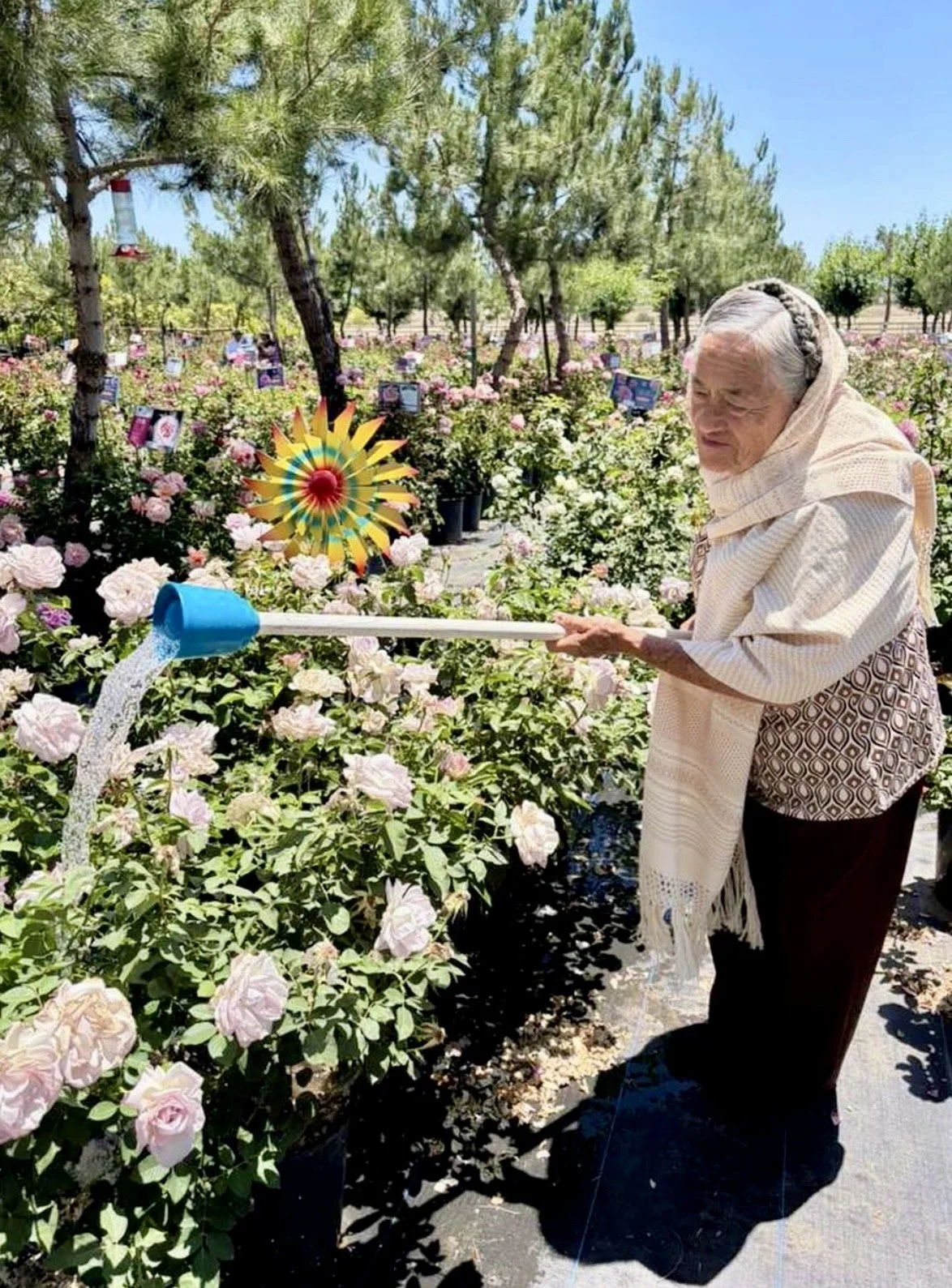
Container roses generally dry out faster than roses planted in the ground. Their watering needs depend on:
Pot size and material
Rose size
Type of potting mix
Sun exposure
Wind
Temperature
Drainage
Whether the pot is sitting on concrete or another hot surface
Check the moisture by feeling the potting mix below the surface. Water when the upper portion begins to dry, but before the entire root ball becomes completely dry.
Water slowly and thoroughly until excess water drains from the bottom of the pot. Empty standing water from saucers unless the rose is actively absorbing it immediately.
Container Guidelines
Always use a container with drainage holes.
Choose a quality potting mix rather than heavy garden soil.
Use a pot large enough for the rose’s mature root system.
Expect to water more frequently during hot, windy weather.
Check small and dark-colored containers especially often.
Repot the rose when roots become severely crowded or the potting mix no longer drains properly.
A container rose may require daily inspection during summer, but this does not automatically mean it needs water every day. Check the soil rather than relying only on a fixed schedule.
Rose Care During
California Summers
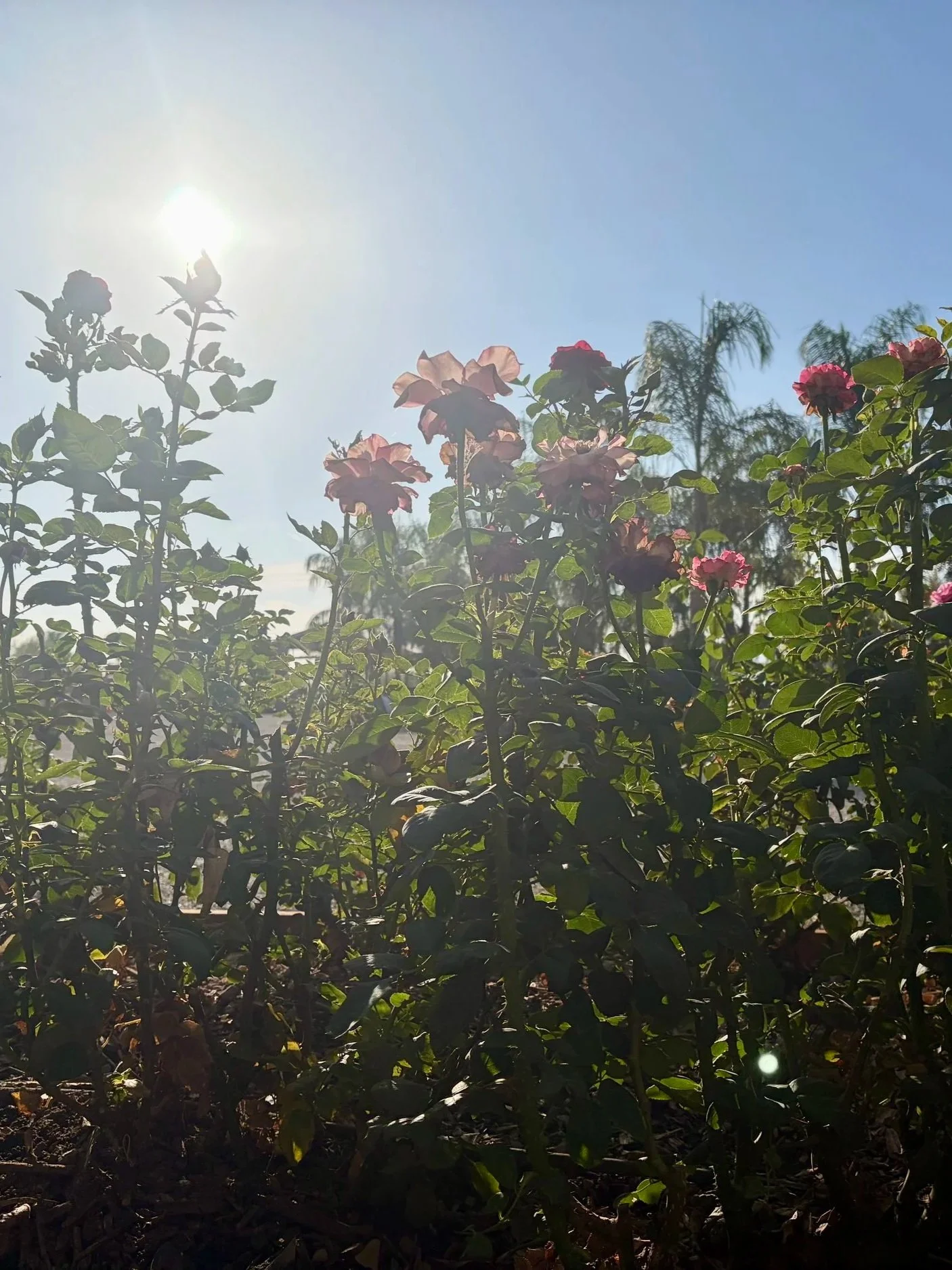
Inland Southern California summers can bring prolonged heat, dry winds, intense afternoon sun, and rapid soil-moisture loss. Roses may continue growing and blooming, but their flowers may be smaller, fade more quickly, develop scorched edges, or temporarily change in appearance.
During Hot Weather
Water deeply in the early morning.
Check newly planted and container roses frequently.
Keep a layer of mulch over the root zone.
Avoid piling mulch directly against the rose canes.
Pause heavy fertilizing during extreme heat.
Avoid major pruning during a heat wave.
Remove only clearly dead or diseased material.
Confirm that drip emitters are functioning and reaching the entire root zone.
Watch for spider mites, which often increase during hot and dusty conditions.
Do not panic if flowers look different during summer. High temperatures can alter bloom size, petal count, color, fragrance, and how long an open flower lasts.
Leaves that are partially sunburned may still shade the plant and produce energy. Avoid removing large amounts of scorched foliage immediately after a heat wave unless it is completely dead or diseased.
Luna Rose Tip
During severe heat, the goal is not to force perfect blooms. Focus on maintaining healthy roots, hydrated canes, and enough foliage to protect the plant until cooler weather returns.

Winter Dormancy and
Winter Pruning
Roses are perennial plants and naturally slow their growth during cooler weather. In warm parts of Southern California, they may not become completely dormant, but winter is still an important resting and maintenance period.
Yellowing leaves, reduced flowering, and slower growth may be part of the normal seasonal cycle. However, sudden decline can also be caused by poor drainage, pests, disease, or irrigation problems.
Winter Care
Reduce watering as temperatures cool and soil remains moist longer.
Continue checking the soil instead of stopping irrigation completely.
Remove fallen leaves and old flower debris.
Inspect canes for damage or disease.
Clean and sharpen pruning tools.
Replenish mulch if necessary.
Delay regular fertilizer until healthy new growth begins.
Winter Pruning
In much of inland Southern California, established repeat-blooming bush roses are commonly pruned during winter, often in January or early February. Exact timing can vary with elevation, frost exposure, weather, and rose type.
Remove dead and unhealthy wood first, then thin and shape the remaining plant. Do not prune every rose identically. Climbers, once-blooming roses, young roses, and landscape varieties may require lighter or differently timed pruning.
After pruning, remove and dispose of old leaves and cuttings to reduce places where pests and disease organisms may remain.